by Naomi L. | July 2, 2014 | Blog, Creative Writing, Tropes |
Some time ago, I wrote a blog post about a trope known as Chekhov’s Gun, a literary device in which a seemingly unimportant detail later becomes significant to the plot. But what if you want to achieve the opposite effect, that is, introduce a supposedly important detail that later turns out to have little or nothing to do with the main story? Today’s post features a sister trope that’s equally useful and just as fun to write. Do you enjoy misleading your readers with deceptive clues? Then let me introduce you to the next handy tool in your arsenal: the Red Herring.
Herring? Where?
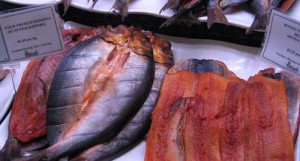
The “red herring” is a type of heavily cured/smoked kipper. The idiom may have originated from anecdotes relating its use as a tool for misleading hunting dogs.
(CC Image by misocrazy via Flickr)
The Red Herring is a common device in fiction, employed by writers who like to keep readers on their toes. Simply put, it’s a clue intended to lead in the wrong direction. This is an especially useful trope for plots that involve a lot of mystery, as misleading details help to keep the element of surprise. After all, a story in which the major secret is easy to deduce from the beginning isn’t really worth the read, is it?
Like the Chekhov’s Gun, a Red Herring generally relies on the principle of conservation of detail to work properly: every detail presented in a story must have a reason for being there, otherwise it should be discarded. Of course, as mentioned above, a Red Herring functions in the opposite manner as a Chekhov’s Gun in that it’s intended to seem important upon its introduction but is later revealed to have been a distraction from the true secret of the story. The challenge for the audience is trying to tell the fake clues from the real ones!
Placing a Red Herring
Although every Red Herring is purposely used to throw the audience off, the best ones still have some significant connection to the plot even after being revealed as false leads. For instance, a clue can be introduced to set up suspicions about a certain character. This character may later turn out to be innocent, but the clue that seemed to be pointing to them justifies another character as the culprit instead. The example provided on TV Tropes is that of suspects in a hypothetical murder case, but I suppose it could apply to any kind of mystery. The only limit is your own imagination!
For writers who like to get really creative, Red Herrings come in different “flavors”. Subtropes include the Red Herring Shirt, when someone in the background turns out to be an important character; the Red Herring Mole, when a character who seems suspicious turns out to be innocent; and the Red Herring Twist, when a detail played as a potential Chekhov’s Gun turns out to be nothing more than a distraction from the main plot. It’s also possible to create a similar effect with a mistake as opposed to intentional misdirection, while a plot twist confused for a Red Herring due to its overly obvious nature is known as an Untwist.
Overall, I find Red Herrings very enjoyable to write, for when placed well, they can definitely add some interesting twists to a story. Have fun trying them out for yourself, and good luck throwing your readers off with misleading clues!
by Naomi L. | June 25, 2014 | Blog, Creative Writing |
Today I’d like to pay tribute to two wonderful people who are very special to me. They have loved and supported me my entire life, and I’m so grateful for everything they’ve done for me. So to honor them both, here’s my take on why grandparents can be such great sources of stories and creative inspiration. Happy Birthday, Grandma and Grandpa! I love you both so much!
Why Grandparents Make the Best Storytellers
 1) They literally have a lifetime of experience to share. A key ingredient to good storytelling is experience. That’s why when writers haven’t been through certain situations firsthand, they research accounts from people who have. Fortunately, some of us are lucky enough to have excellent sources right in our own families, and those are usually the people who have been through the most in life. Grandparents have decades of experience to share, and that adds up to a lifetime of interesting stories (to cite examples from my family, my maternal grandmother was a ballet dancer and my late paternal grandfather was a WWII veteran). You may have a goldmine of creative ideas among your own relatives, so why wouldn’t you want to take advantage of that?
2) They’re living witnesses to how quickly times change. “When I was your age” seems to be a favorite phrase of many elders, and while young people have a tendency to take it for granted, it’s definitely one of those sentence starters that shouldn’t be ignored. History has never changed at such an accelerated pace as it has in the last couple of centuries, to the point where there are references that only people who grew up in a specific decade will understand (I myself am one of the “’90s kids”). That’s why the longer someone has lived, the more they can testify to how quickly times change. So once in a while, stop and listen to what your grandparents have to say about how the world was when they were young. You’re bound to learn about realities you never even imagined!
3) Their stories come with valuable advice. The best stories are those with lessons that can be applied to real life, and grandparents are full of wisdom just waiting to be imparted. Even if they aren’t applicable to your writing, you’re still likely to find a good moral or two by which to live your life. On top of enlightening you about the past, your grandparents can also teach you how to make the most of your future!
4) They’re comfortable with their audience. Isn’t it wonderful when a storyteller is so close with their audience that there are no inhibitions when it comes to sharing a tale? This seems to happen most frequently among family members. Elders often seem eager to pass their knowledge on to younger generations, and anyone patient enough to listen will likely find that this makes for some pretty good storytelling. Grandchildren, remember: if nothing else, you can always appreciate the joy your grandparents feel when telling you their stories!
5) They tell their stories with love! If there’s one thing grandparents have plenty to give, it’s unconditional love! All the stories and wisdom they share with their grandchildren are told with good intentions; they want their loved ones to learn as much as possible about life and to succeed in the world. You should always respect your elders, but especially your grandparents. If they enjoy talking to you and spend hours telling you stories, it’s because they love you!
Are your grandparents still around? Do (or did) you enjoy listening to their stories? What have you learned from them?
by Naomi L. | June 18, 2014 | Blog, Creative Writing |
Hello, and welcome to the June round of Writers Reveal! This month’s topic was sent to us by Melissa of Melissa Writes. Her topic for us is: “When life gives you lemons… how do you keep on writing?” Challenge accepted! Thanks for the prompt, Melissa!
What to do when life tries to give you lemons?
Everyone knows that famous saying: “When life gives you lemons, make lemonade.” We also understand what it means: instead of getting discouraged about life’s challenges (the proverbial lemons), one should strive to turn them into positive experiences (the proverbial lemonade). So we take that advice to heart and try our best to live with optimism, because we know deep down that life is best experienced with sweet refreshing lemonade as opposed to a pile of yucky sour lemons.
 This is what “normal” people do. But not writers. We do very different things with the lemons life gives us. Not always, but often. Why? Because sour or sweet, they pose equal safety and risk to our writing. Yes, pure lemonade is great, but while it’s beneficial to real life experience, time spent making it is time taken away from the art that in many cases thrives on the lemons as well.
So what does my inner writer tell me to do when life tries to give me lemons? It depends on the situation, but she sometimes likes to take an alternative route to the traditional approach.
Throw the lemons back!
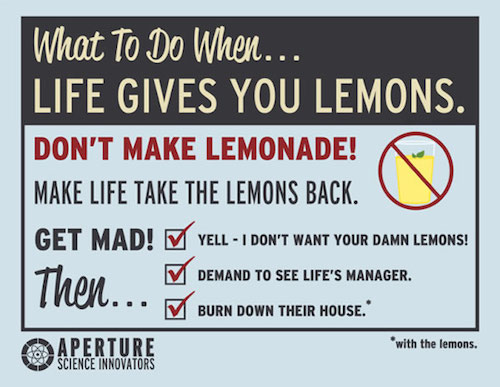
When life gives you lemons, don’t make lemonade. Make life take the lemons back! Get mad! I don’t want your damn lemons! What the hell am I supposed to do with these? Demand to see life’s manager! Make life rue the day it thought it could give Cave Johnson lemons! Do you know who I am? I’m the man who’s gonna burn your house down! With the lemons! I’m gonna get my engineers to invent a combustible lemon that burns your house down!
– Cave Johnson, Portal 2
OK, so I wouldn’t go as far as trying to invent combustible lemons, but sometimes when life drops too many obstacles at once into my course of writing, I just get frustrated. I wish I had the motivation to be optimistic all the time, to keep on creating the stories that so often themselves are the lemonade of my life. But the types of challenges I usually face actually keep me from making that lemonade and instead seem to push me into making some kind of lemon sorbet. And while I do come out of them a better person each time, how fulfilling can that truly be if they rob me of the time to put that new experience to the best use I know how?
So once in a while, when I’m tired of being bombarded with life’s lemons, I grab them and throw them back. I refuse to make anything out of those lemons. I try to forget they exist and just concentrate on writing about things completely unrelated to whatever I’m going through at the moment. Is that irresponsible? Maybe. Almost definitely, in fact. But that’s what I do. There are times when I need a break from life altogether, and more often than not, writing is just the thing to help me recharge so that when life decides to throw those lemons at me a second time, I’ll be ready to turn them into some darn good lemonade.
Make your own lemons! Whaaat?
Life isn’t really life without its fair share of challenges, but some of us are lucky enough to experience an opposite kind of existence, where lemonade is constantly handed to us free of charge and all we have to do is sit back and enjoy. I’m fortunate enough to live without major struggles that relentlessly test my inner strength and push me to a potential breaking point over and over again. I am one of the lucky ones. Life gives me more lemonade than lemons, and for that, I am grateful.
Having said that, this also poses a hazard to writing. Nobody wants to read stories where everyone is happy all the time and nothing bad ever happens, because those would be ridiculously boring. As much as they threaten our creative time, writers need lemons because they provide inspiration for the conflicts in our fiction. So what do I do when life won’t give me those lemons? I make my own.
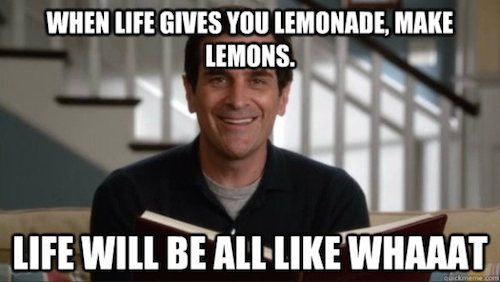
I know it would be unwise to purposely create complications for myself (which I sometimes do anyway, but that’s beside the point). Life is going to hand out plenty of those on its own, so there’s no need to add to the burden if it can be avoided. Instead, I try to imagine challenges I’ve never personally faced… and then make my characters face them. Essentially, I play the part of life by giving out the lemons.
I’ve written stories about forbidden love, prejudice and senseless hatred. I’ve pitted characters against each other in action scenes fraught with violence. I’ve made them face all sorts of creatures from dragons to giant robots. I’ve subjected them to enough emotional stress to drive a real person close to a breakdown. But the best part of it all is making my characters take on all these challenges and overcome them. In a way, it’s reassuring to see them take all the lemons I give them and turn them into lemonade, because it’s as if my subconscious is telling me that if my own characters can make the best of an imaginary life, then I can certainly make the best of a real one.
When life gives me lemons, how do I keep on writing? Sometimes I don’t, but when I do, I do my best to turn those lemons into the most delicious lemonade ever.
What about you? What do you do with the lemons life gives you?
This has been a special topic post for Writers Reveal, a monthly blog swap among several talented writers. Be sure to check out the other blogs participating in the event. Thanks for reading!
Other bloggers in Writers Reveal
Melissa Khalinsky: Melissa Writes
Becky Fyfe: Imagine! Create! Write!
Ashley Howland: Ghostnapped
Emily Hawker: You Learn Something New Every Day
by Naomi L. | June 11, 2014 | Blog, Creative Writing |
English is a complex language, as many of its non-native speakers are well aware. Among the several confusing aspects of its grammar is the issue of plural forms. While those who grew up speaking English tend to take them for granted, I know several people still learning the language who find it odd that “houses” can be infested with “mice” or that North America has “moose” and “geese”. Most unusual plural forms are common knowledge to us, but even native English speakers can be thrown off by some lesser known plural forms.
Just for fun, here are three plural forms that are uncommonly known to be correct. Enjoy, and be careful not to get them wrong!
1) Fishes
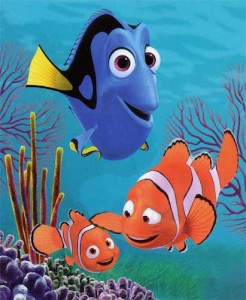
There are three fish in this picture, but only two fishes! (Finding Nemo, 2003)
This may be my favorite uncommon plural word because it’s one I see all the time in my field of study. As a Marine Biology student, I’m constantly reading papers and book chapters containing the keyword “fishes”, and I’d be lying if I said I didn’t feel smart for knowing why this plural form of “fish” is correct.
We were taught as children that the plural of “fish” is the same as its singular form, while fewer of us have been exposed to its other plural form in scientific contexts. But here’s the catch (no pun intended): “fishes” is used to indicate multiple kinds of fish (as in “Fishes of the Caribbean”), while “fish” is used to indicate multiple individual fish (note that “fishes” was once used in this sense too, but has since fallen into disuse).
So yes, you’ll probably still be using “fish” most of the time, but at least you now know why the famous phrase “sleeping with the fishes” isn’t entirely wrong!
2) Octopuses
I bet you’ve gone most of your life thinking that the plural form of “octopus” is “octopi”. Don’t worry; so have I. When I was a kid, I had a Math book titled “How Do Octopi Eat Pizza Pie?”, and ever since, I’d been walking around thinking more than one “octopus” should be called “octopi”. Turns out, until last month, I’d thought wrong.
Similar to the previous example, we were taught at a young age to follow a specific rule when creating the plural form of certain words, but without really understanding why. We just know that several words ending in -us are pluralized by replacing the last two letters with -i. However, this mostly applies to some words derived from Latin, such as “cactus” (which, despite being Greek in origin, counts as an example of botanical Latin). “Octopus”, on the other hand, is etymologically Greek, and thus does not obey this rule. This is why “cacti” is correct (though “cactuses” is also acceptable), while “octopi” is not. Instead, pluralize “octopus” as “octopuses” or “octopodes”, and if anyone ever tries to correct you, you’ll know how to explain why your way is correct!
3) Dwarfs
Fans of The Lord of the Rings and other fantasy stories by J.R.R. Tolkien may be overly familiar with the word “dwarves”. What many may not realize, though, is that this is actually a newer plural form of “dwarf” that was popularized by the author (though it seems to have originated elsewhere). The standard plural form is actually “dwarfs”, and is the correct spelling for most contexts. However, “dwarves” seems to have become increasingly acceptable in fantasy fiction to indicate multiple individuals of a race of little people, so it shouldn’t be disregarded completely. The important thing is to know the difference, especially if you write a lot in the fantasy genre. Whether you’re referring to “Snow White and the Seven Dwarfs” or the “elves” and “dwarves” of Middle-earth, make sure you know when to use which form!
What are your thoughts on these unusual plural forms? Any more you would add to this list?
by Naomi L. | June 4, 2014 | Blog, Creative Writing, Motivational Music |
If you read my post about VOCALOID last week, you probably saw this coming. If you didn’t, I strongly recommend you take a quick look at that one in order to understand what I’m about to show you now. All caught up? Great, then let’s get started!
This may seem rather bizarre since my last Motivational Music post featured classical music, but I guess that just goes to show how diverse my musical taste really is, and more importantly, how many different styles can inspire my writing (and hopefully yours). Ready for a taste of music from Japan? Then allow me to dig just a little deeper into the aforementioned love of mine by sharing music that features the voices of my three favorite Vocaloids: Hatsune Miku, Megurine Luka and KAITO.
Hatsune Miku

Hatsune Miku (V3)
Genre(s): Pop, Rock, Electronic
Origin: Tokyo, Japan (Fujita Saki, Miku’s voice provider)
Writing Inspiration: Humor, Drama, Romance
My Favorite Song(s): “World is Mine“, “Magnet” (duet with Megurine Luka), “Romeo and Cinderella“, “Rolling Girl“, “Tell Your World“, “Senbonzakura”
My Favorite Producer(s): ryo (Supercell), Hachi, kz (livetune), wowaka, Mitchie M
Popularly known as “everyone’s favorite digital diva”, Hatsune Miku has been a national celebrity in Japan for years and more recently seems to be making quite an impact in the Western world. She was designed to represent the future of music (reflected in her name, as “hatsu-ne-miku” means “first sound of the future”), and by now has likely been used to sing in every genre of music imaginable (and I mean every genre, from opera and Broadway to heavy metal and dubstep). I often think of Miku as the Jack-of-all-trades of the Vocaloids; she has a voice suited to all types of music, but she isn’t always the best choice of vocals for a given song (case in point, virtually every other popular Vocaloid has a cover song that’s arguably better than its corresponding Miku original: “A Single Red Leaf” as sung by Luka, “Electric Angel” as sung by Rin and Len, “Poetaster and Singing Dolls” as sung by Gakupo, “My True Self” as sung by Kaito and Meiko, etc.). That being said, the songs that are well-suited for her are awesome.
Because most of her popular songs are upbeat, I’ve found Miku to be great inspiration for cheerful themes and stories with happy endings. At the same time, she sings a variety of songs that make good inspiration for other types of writing, including romantic, melancholy, terrifying, and just plain bizarre. Even if all you need is motivation to create, Miku is very good at cheering her listeners on and making them feel special. The subject matter of her songs covers everything from the meaning of life to vegetable juice, so whatever you plan to write, chances are there’s a Hatsune Miku song out there that may inspire you!
For some awesome music featuring Miku’s vocals, I recommend looking up songs produced by ryo, Hachi, livetune, wowaka and Mitchie M. Of course, great Hatsune Miku songs are never in short supply, as evidenced by the fact that she dominates Nico Nico Douga’s Hall of Legend. What can I say? She’s clearly everyone’s favorite digital diva for a reason!
Megurine Luka

Megurine Luka
Genre(s): Ballad, Pop, Dance
Origin: Tokyo, Japan (Asakawa Yuu, Luka’s voice provider)
Writing Inspiration: Drama, Tragedy, Romance
My Favorite Song(s): “Witch Hunt“, “Toeto“, “Double Lariat“, “Circus Monster“, “Happy Synthesizer” (duet with GUMI)
My Favorite Producer(s): fatmanP, Yuyoyuppe, Suzuki-P, Circus-P
My other favorite female Vocaloid, Megurine Luka‘s most notable quality is her ability to sing in both Japanese and English (hence the name “meguri-ne”, which translates as “round sound”). Unlike Miku, Luka is best known within the VOCALOID fandom as a ballad singer for her low mature-sounding voice, and most producers famous for using her have her sing slow, sad songs. That isn’t to say she only excels in this genre, though; in fact, some of her biggest hits are the type of songs that make you want to get up and dance (would you believe me if I told you I know the whole choreography to this song?). Her soft soothing vocals also make her an excellent choice for songs with romantic themes, so she’s definitely a potential favorite of fans who enjoy those types of stories!
Luka has been great inspiration for some of my more dramatic writing, such as romance and tragedy. Some of her best ballads are written by fatmanP and Yuyoyuppe, while Circus-P is famous for writing original songs for her in English. Luka is a popular choice among various producers, though, so your best bet to find great music featuring her voice is to check out her music page on the VOCALOID wiki. She may not be as famous as Miku, but you’ll find that she too has a wide variety of great songs to enjoy!
KAITO

KAITO V3
Genre(s): Folk, Electronic, Rock
Origin: Japan (Fuuga Naoto, Kaito’s voice provider)
Writing Inspiration: Romance, Humor, Poetry
My Favorite Song(s): “A Thousand-Year Solo“, “Tsugai Kogarashi” (duet with MEIKO), “Cantarella“, “What’s COLOR?“, “Crescent Moon”
My Favorite Producer(s): Shigotoshite-P, Shinjou-P, natsuP, Kurousa-P
Kaito (also known by his fan-given name Shion Kaito) is my favorite male Vocaloid. In a franchise that consists mostly of female voices, it’s refreshing to enjoy a lower register of vocals once in a while (plus a cute face to match, *wink*). Being one of only two Japanese voicebanks for the original VOCALOID engine (the other being Meiko), he is actually older than Miku and Luka (who were both released for VOCALOID2), but took considerably longer to become as popular. Due to his standing as a veteran Vocaloid, Kaito has a tendency to sound more “electronic” than his successors, but the best producers who use his voice know how to play this to their advantage. Because of this, many of Kaito’s best songs don’t try to hide the fact that he isn’t real, but instead use him to create a unique sound or theme that a human singer couldn’t pull off.
Most of the songs featuring Kaito at his best come in the form of traditional folk music or electronic tracks that showcase his original sound, though he’s also frequently used to sing rock (usually in the visual kei band VanaN’Ice with Kamui Gakupo and Kagamine Len). He’s also very good at singing duets with other Vocaloids; one of the biggest shipping wars I’ve ever come across in the fandom is about whether he makes a better couple with Miku (as in “Cendrillon“) or with Meiko (as in “A Pair of Wintry Winds“), and his cover of “Magnet” with Gakupo proves he has excellent chemistry with female and male Vocaloids alike. Since his V3 update, Kaito has become even more versatile, adding softer tones to his voice and even gaining the ability to sing in English, so good music sung by him isn’t likely to run out anytime soon!
Because of his range as a singer and a character, I find Kaito to be great inspiration for various types of writing, especially romance, humor and poetry. Most of my favorite songs featuring his voice were written by Shigotoshite-P (Japanese folk music), Shinjou-P (electronic) or natsuP (rock), so if you’re looking for some great Kaito songs, I highly recommend starting with music by any of these talented ladies. They really know how to make him shine!
Bonus: Want to hear a song performed by all three of these amazing Vocaloids? Try “ACUTE“; yes, it’s a tragic story about a love triangle, but the music is great!
I hope you’ve enjoyed learning about my three favorite Vocaloids, and that you have fun listening to the music I’ve shared with you! Thanks for reading/listening!
VOCALOID is a product of Yamaha. Hatsune Miku, Megurine Luka and KAITO belong to Crypton Future Media. All official artwork is displayed for illustrative purposes only. I own nothing!



Recent Comments