by Naomi L. | October 5, 2016 | Blog, Creative Writing, Featured |
Welcome to the first week of October, or as it’s come to be known here on The Wolfe’s (Writing) Den, “Romeo & Juliet Week”! Yes, every year around this time, I like to share a post about my favorite love story: since I started blogging in 2013, I’ve covered five points that are commonly missed, the reasons this is such a great love story, and a book review of Romeo & Juliet / West Side Story.
Now I’d like to continue the trend this year with a post about some of the lessons we can all learn from Shakespeare’s timeless romance. So on that note, here are five lessons about love in Romeo & Juliet! Enjoy!
1) Love is blind.
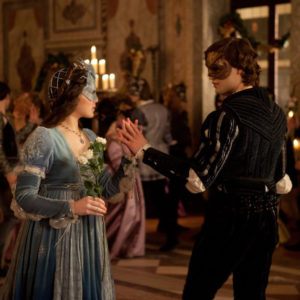
Romeo and Juliet meet at the Capulet Ball and fall in love at first sight (Romeo & Juliet, 2013)
This is arguably one of the most famous lessons taken from Romeo & Juliet (second to, if not tied with, the fourth point on this list). The city of Verona is torn by a feud between two influential households, “both alike in dignity”, yet against all odds, a pair of teenagers from either family find each other and fall in love at first sight. Initially blind to the fact they’re supposed to be enemies, they’re understandably shocked and disappointed after learning each other’s names, but still strive to be together in spite of the hatred that threatens to keep them apart.
Romeo and Juliet’s decision to set aside their differences in favor of romance proves true the famous idiom “love is blind”, and this has become a common theme in many adaptations. A well-known example is the musical West Side Story, in which a Polish-American boy and a Puerto-Rican girl fall in love against a backdrop of racial intolerance and street gang warfare. If there’s one lesson common to all versions of this story, it’s that love is and always will be universal. Be it in social position, race, or anything else, wherever fear and hatred create barriers, love will keep on tearing them down. Which goes to show…
2) Love brings out the best in us.
Too many people focus on the tragic themes in Romeo & Juliet without giving enough credit to the positive points. It’s easy to dismiss the title characters as naïve and misguided teenagers throughout this four-day course of events, but it’s important to keep in mind that they’re very different people by the end of the story than they were in the beginning.

Romeo and Juliet profess their love for each other over Juliet’s balcony (Romeo and Juliet, 1968)
Remember that before Romeo meets Juliet, he quite possibly suffers from depression due to perceived parental neglect and a hopeless infatuation with a young lady named Rosaline. Meanwhile, Juliet before Romeo is the picture of an innocent and sheltered child, pressured by her parents into a marriage of convenience with virtually no freedom to pursue happiness on her own. As I’ve noted before, Romeo & Juliet can be considered a coming-of-age story because after these teenagers cross paths, they quickly blossom into more mature people: Romeo becomes a deeply passionate and devoted lover, Juliet becomes a strong and confident woman, and both are willing to sacrifice everything for the love that makes them the best possible versions of themselves.
Now you may argue that Romeo wasn’t all good inside because he murdered Tybalt, but don’t forget that this act is brought about by his anger over Tybalt murdering his friend Mercutio and has nothing to do with Romeo’s marriage to Juliet. It’s hatred that brings out the worst in this story’s characters, while love only ever brings them happiness and hope for a peaceful future, at least to the ones who are willing to seek it.
Unfortunately, as these young lovers quickly learn, love has a tragic side as well…
3) Life without love is not worth living.
Our idealistic young heroes clearly believed their story was destined to last a lifetime, but sadly, as we all know, it was not to be. In the beginning of Act V, Romeo’s entire world is shattered when he learns that his beloved Juliet is dead (which we know is only part of Friar Laurence’s master plan, but this poor kid missed the memo). Heartbroken, it takes him about a second to decide his next course of action: to drink poison and die at his wife’s side.
Melodramatic, much? Not for someone in Romeo’s shoes. Don’t forget, in the course of a day, this teenage boy lost his best friend, his family, his home, and his social standing, and only narrowly escaped Verona with his life. Juliet was his last ray of hope, and now suddenly, she’s gone too. What else is a grieving young lover, with nothing left to live for, to do but follow his beloved into the afterlife?
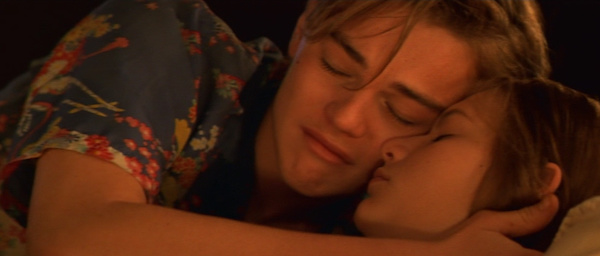
Romeo mistakenly believes Juliet is dead and resolves to die at her side (Romeo + Juliet, 1996)
Romeo’s decision to kill himself only after losing Juliet can be seen as a testament to how much she truly means to him. Even after losing everything else, he holds on to the hope of a future with her, and only gives up on life after that one hope is snatched away. Juliet, in turn, clearly loves Romeo just as deeply, as it also takes her literally a second to choose eternity in death with him over a miserable life alone. The star-crossed lovers are faced with an unthinkable choice in the play’s final scene, yet neither one of them hesitates to die for the other because they already know in their hearts the one truth no one else in the story seems to understand: life without love is not worth living.
Which leads us to the next lesson…
4) Love stories don’t always end happily.
Is there any tragedy in all of literature more famous than the plight of Shakespeare’s star-crossed lovers? Since premiering on stage just over four centuries ago, Romeo and Juliet have become the archetypal young lovers thwarted by fate, a symbol of romance doomed to a tragic end.
After learning of his wife’s supposed death, Romeo ventures into the Capulet tomb to say his final goodbye (“Eyes, look your last. / Arms, take your last embrace.” (5.3.112–13)) and die by Juliet’s side. Upon waking moments later and discovering her husband’s body, Juliet kisses him one last time and promptly plunges his dagger into her heart without a second thought (“O happy dagger, / This is thy sheath. There rust and let me die.” (5.3.169–70)). Fast forward to the Capulets and Montagues grieving for their dead children and the Prince chastising both families for leading these young lovers to their tragic end (“For never was a story of more woe / Than this of Juliet and her Romeo.” (5.3.309–10)).
As prolific readers and writers of romance well know, love stories don’t always end in “happily ever after”. Yet even tragic love stories can still drive home the most powerful message of all…
5) But in the end, love is still stronger than hate.
Romeo and Juliet may not have gotten their happy ending, but the love that compelled them to willingly die for each other still accomplished a miracle: it ended the generations-old feud between the Capulets and Montagues. This may seem like a consolation prize, but it’s still nothing to sneeze at; after all, not even the Prince of Verona could achieve peace between these families!
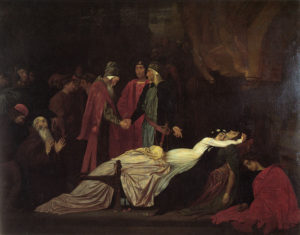
“The Reconciliation of the Montagues and Capulets over the Dead Bodies of Romeo and Juliet”, 1855, oil on canvas painting by Frederic Leighton
One of the central themes of Romeo & Juliet is passion, which manifests equally in love and in violence. Both are powerful and conflicting forces throughout the story, but ultimately, it’s love that conquers hate. To prove this point, compare the deaths of Romeo and Juliet to those of Mercutio and Tybalt. The latter pair engage in a heated duel and both end up suffering violent deaths brought on by anger and hatred; as a result, tensions between the Capulets and Montagues escalate and the feud only gets worse. In contrast, Romeo and Juliet, each the only child and last descendant of their respective families, willingly take their own lives in a final desperate act to escape the violent cycle keeping them apart and be united for eternity. Only then do Montague and Capulet realize their mistakes and make amends, for while they could easily blame Mercutio and Tybalt’s deaths on their enemies, they have no one to blame for Romeo and Juliet’s deaths but themselves.
Romeo & Juliet is one of the greatest love stories ever written, with strong lessons of romance that live on to this day. Whether proving that hatred kills or that love is the most powerful force in the world, Shakespeare’s classic play is a testament to the enduring passions of humanity, and it will always be my favorite story as much for the above lessons as for its ultimate message: life is fleeting, but love is forever.
What about you? What lessons do you think can be learned from Romeo & Juliet? What has this classic story taught you about love?
by Naomi L. | October 3, 2016 | Blog, Word of the Week |
Word: leitmotif
Pronunciation: LYT-moh-teef
Part of Speech: noun
Definition: a recurrent theme throughout a musical or literary composition, associated with a particular person, idea, or situation
Source: Oxford Dictionaries
Have you ever watched a movie or musical play and noticed that some pieces of the musical score always played when certain characters were on-screen/stage? This use of recurring themes is a popular trope in works that use music to convey ideas or represent characters. One of my favorite examples of such works is the video game Undertale, which makes heavy use of recurring and remixed musical themes to hint at connections between characters in the story. This has led to the common consensus among fans that creator Toby Fox is a genius when it comes to using “leitmotifs”!
A “leitmotif” is a theme that recurs throughout a musical or literary work and is associated with a particular person, idea, or situation. The word arose in English in the late 19th century and comes from the German noun Leitmotiv, meaning “leading motive”. This noun comprises the verb leiten “to lead” and the noun Motiv “motive”.
The word “leitmotif” was originally used in reference to Richard Wagner‘s operas and is a device most commonly associated with musical scores and soundtracks, as evidenced by its Wikipedia and TV Tropes pages, though its modern usage seems to be expanding its definition into literature. Note that “leitmotif” can also be spelled the original German way: “leitmotiv” (though it needn’t be capitalized in English as all nouns are in German). You may not find this word particularly useful if you only write literature, but if you compose music for stories (or write characters who do), “leitmotif” could be a handy addition to your vocabulary!
What are your thoughts on this word? Any suggestions for future “Word of the Week” featured words?
by Naomi L. | September 28, 2016 | Blog, Creative Writing |
I’ve made no secret of the fact that much of my inspiration for writing comes from my family. Some of that inspiration comes from observation while some of it comes directly from the lessons they teach me, and some of the best lessons I’ve ever learned came from my mother. She’s one of the wisest people I know, and many of her lessons have made their way as much into my personal life as into my stories. They say “write what you know”, and much of what I know about life comes from her!
So this week, I’d like to dedicate my creative writing post to my amazing role model and share three of my favorite lessons from her that inspire my stories. Enjoy, and thanks for the inspiration, Mom!
1) Marry someone with whom you share mutual love and respect.
 As I’ve mentioned a few times before, my parents are my greatest inspiration for romance. They talk about everything, laugh with each other often, and clearly love and respect each other immensely. That’s why most of the romantic relationships in my stories are between people who start out as friends and who would go to the ends of the Earth for one another. My mom clearly didn’t settle when it came to choosing her life partner because my dad does everything to make her happy and take care of their family. At the same time, he isn’t exactly the easiest person to live with, yet she always seems to know how to talk to him and what to say to keep him content (an art I’m still trying to master myself).
It’s this amazing balance that I try to practice in my personal life, as well as give my characters when I want to convey how much they really care for each other. True love is hard to find, so I’m lucky to have such excellent role models in my parents. One of the best lessons my mom taught me is that a woman should be loving and understanding, and should never settle for a partner who doesn’t appreciate how wonderful she is!
2) Being a mom is the hardest job in the world.
 One of the qualities I admire most about my mom is how great she is at being a mother. She always took excellent care of me and my sisters, guiding us through life and protecting us from the dangers of the world while still giving us the freedom to develop our own personalities. Now as an adult taking on my own responsibilities, it’s become clear to me in hindsight how much my mother truly did to give us a happy childhood. Raising three daughters and running a household were definitely challenges in and of themselves, yet she always made them seem effortless. And on top of everything, I didn’t exactly make the job any easier for her when I was growing up. Let’s just say I went through some attitude issues in my early teens and she had to bear the brunt, always handling the situation with a level of patience that I couldn’t even dream of. I can only imagine the challenges that lie ahead if I ever become a mom!
Whenever I write characters who are mothers, I try to keep in mind the difficulty of the job and imagine backstories for them full of the trials of raising children by drawing inspiration from everything my mother has done for her family. And not to speak too highly of how I think I turned out, but I believe she did a pretty great job!
3) There’s no relationship like the bond between and a mother and daughter!
I admit it: every time I watch Pixar’s Brave, it makes me want to hug my mother and tell her I’m sorry for everything I ever put her through. The story of Princess Merida and Queen Elinor is reminiscent of the relationship I had with my mom growing up: she taught me everything she could about being a lady, yet being a stubborn tomboy who mostly took after her father, I didn’t always see eye-to-eye with her. Still, I appreciate all her efforts to raise me into a “princess”, and while I often rebelled as a child, I understand now that she always had my best interests at heart and that she was the only one who could ever have taken on the task. As much as I’ve learned from my father and my sisters over the years, my relationship with my mother will always be special and unique!
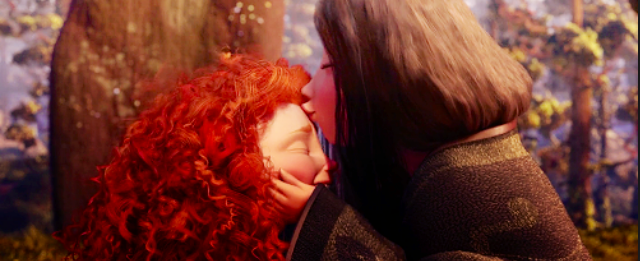
Princess Merida and her mother, Queen Elinor (Brave, 2012)
Much like how the story turns out for Merida and Elinor, I like to think my mom’s efforts did pay off in the end and that we have a great friendship today. No matter how many times we’ve argued in the past, my mother is still my greatest role model, and I can only hope that if I ever have a daughter of my own someday, I can be at least half the guardian, mentor, and inspiration to her as my mom is to me. For now, though, I’ll simply have to settle for modeling some of my characters after her and using her lessons as inspiration for my stories, both fictional and real life!
What about you? Have you ever drawn creative inspiration from your mother’s lessons? What sorts of stories or poetry has she inspired?
Today’s post is dedicated to my mother, whose love and lessons have always been a wonderful inspiration to me. Happy Birthday, Mom! I love you!
by Naomi L. | September 26, 2016 | Blog, Word of the Week |
Word: circumlocution
Pronunciation: sər-kəm-lə-KYOO-sh(ə)n
Part of Speech: noun
Definition: the use of many words where fewer would do, especially in a deliberate attempt to be vague or evasive
Source: Oxford Dictionaries
Have you ever tried having a discussion with someone who insisted on stalling the conversation to no end or using a thousand words for something that could have been said in three? I’m sure we’ve all met people like that before, but while some simply like to hear themselves talk, others deliberately use this practice as an evasive maneuver to avoid an unpleasant topic. The way they see it, when verbal confrontation is inevitable, a good escape route is “circumlocution”!
“Circumlocution” is the use of many words where fewer would suffice, typically in an attempt to be evasive or vague. The word arose in late Middle English and comes from the Latin noun circumlocutio, meaning “indirect speech”. This noun comprises the adverb circum “around” and the verb loqui “to speak”.
Fun fact: I learned this word while reading about the same video game character who inspired my post on the word “nihilism“, as he tends to be vague about the reason behind his laziness for fear of upsetting his loved ones with his discovery. Interestingly, the Latin word for “circumlocution” is probably a translation of the Greek noun periphrazein “periphrasis”, defined as “the use of indirect and circumlocutory speech or writing”. Because of this, these two words are possibly interchangeable, though notably the latter’s definition makes no reference to a deliberate use of indirect speech to be evasive. If your characters try to avoid unpleasant topics of discussion with long and vague speeches, you may enjoy pointing out the “circumlocution” in your stories!
What are your thoughts on this word? Any suggestions for future “Word of the Week” featured words?
by Naomi L. | September 21, 2016 | Blog, Creative Writing |
Every morning, as part of my daily routine, I exercise my mind with the Elevate – Brain Training app. I tend to do well in most of the Writing games, but there is one that almost always trips me up no matter how many times I play it: Error Avoidance. In this game, you’re provided with a series of sentences, each containing two words that can easily be confused, and your goal is to fill the gauges on the screen by correctly choosing whether to swap the words or leave them as they are. I’ve played rounds of this game that lasted several minutes because I kept either mixing up the words I didn’t know or second-guessing the ones I did. It seems even for native speakers, English is a difficult and confusing language!
I’ve featured a list of 25 sets of easily confused words on my blog before, but playing Error Avoidance has inspired me to share some more. So for your reference, here are 25 more sets of easily confused words to watch out for in your writing. Enjoy!
 1) Abjure / Adjure – To “abjure” is to solemnly renounce a belief, cause, or claim. To “adjure” is to urge or request someone solemnly or earnestly to do something.
2) Abstruse / Obtuse – To be “abstruse” is to be difficult to understand. To be “obtuse” is to be slow to understand.
3) Allude / Elude – To “allude” to something is to call attention to it indirectly. To “elude” is to evade or escape from danger.
4) Amoral / Immoral – To be “amoral” is to lack a moral sense. To be “immoral” is to not conform to accepted standards of morality.
5) Amuse / Bemuse – To “amuse” is to entertain someone. To “bemuse” is to bewilder or confuse someone.
6) Appraise / Apprise – To “appraise” something is to assess its value or quality. To “apprise” is to inform someone.
7) Credible / Creditable / Credulous – To be “credible” is to be convincing or able to be believed. To be “creditable” is to be worthy of acknowledgment. To be “credulous” is to be too ready or willing to believe things.
8) Elegy / Eulogy – An “elegy” is a reflective poem, typically a lament for the dead. A “eulogy” is a speech of praise about someone who has recently died.
9) Emigrate / Immigrate – To “emigrate” is to permanently leave one’s home country. To “immigrate” is to move to a new country.
10) Endemic / Epidemic – To be “endemic” is to be exclusive to a particular area. An “epidemic” is a widespread occurrence of a disease or phenomenon.
11) Entomology / Etymology – “Entomology” is the study of insects. “Etymology” is the study of the origin of words.
12) Envelop / Envelope – To “envelop” is to wrap up or surround something completely. An “envelope” is a paper container used for holding letters.
13) Existent / Extant – To be “existent” is to be real. To be “extant” is to still be present.
14) Flaunt / Flout – To “flaunt” is to show off. To “flout” is to openly disregard the rules.
15) Flounder / Founder – To “flounder” is to struggle helplessly. To “founder” is to sink or fail.
16) Forbear / Forebear – To “forbear” is to refrain from doing something. A “forebear” is an ancestor.
17) Imply / Infer – To “imply” is to strongly suggest something. To “infer” is to draw a conclusion based on evidence and logic.
18) Inequality / Inequity – “Inequality” is a lack of equality. “Inequity” is a lack of fairness or justice.
19) Moral / Morale – To be “moral” is to be concerned with principles of right and wrong. “Morale” is the confidence and enthusiasm of a person or group of people.
20) Perpetrate / Perpetuate – To “perpetrate” is to commit a crime. To “perpetuate” is to make something continue indefinitely.
21) Persecute / Prosecute – To “persecute” is to treat someone unfairly, typically because of race, religion, or political views. To “prosecute” is to institute legal proceedings against someone.
22) Rational / Rationale – To be “rational” is to be in accordance with reason or logic. “Rationale” is a set of reasons or a logical basis for a course of action.
23) Sallow / Shallow – To be “sallow” is to have an unhealthy yellow or pale complexion. To be “shallow” is to lack depth.
24) Sanguine / Saturnine – To be “sanguine” is to be positive and optimistic. To be “saturnine” is to be slow and gloomy.
25) Upmost / Utmost – To be “upmost” is to be the highest. To be “utmost” is to be the greatest or most extreme.
What about you? Are there any words you often get mixed up? What other pairs or sets of words would you add to this list?
by Naomi L. | September 19, 2016 | Blog, Word of the Week |
Word: putative
Pronunciation: PYOO-tə-tiv
Part of Speech: adjective
Definition: generally considered or reputed to be
Source: Oxford Dictionaries
Okay, so this is a little embarrassing to admit, but I learned today’s Word of the Week from a minor mistake I made in an early draft of my thesis. While citing references for cases of transatlantic larval dispersal in reef fish, I included a species that had only been speculated – but not confirmed – to display this trait. I didn’t notice the mistake until my professor told me to double-check the reference, at which point I realized that I had missed the single word that changed the entire meaning of the sentence. Lesson learned: there’s a world of difference between a confirmed quality and a “putative” quality!
A “putative” person, place, thing, or idea is reputed or generally considered to be said person, place, thing, or idea. The word arose in late Middle English and comes from the Old French adjective putatif, which in turn derives from the Latin adjective putativus, meaning “thought” or “supposed”. This adjective stems from the verb putare, which means “to think”.
As the above example demonstrates, the word “putative” is useful for defining what is generally thought to be something without any hard proof to support the claim. I assume it works best in the context of an idea that at least can easily be accepted as truth based on evidence, though this might not always be the case. If your stories include details that aren’t confirmed to be true (at least by your characters), “putative” may be a good word to keep on your list!
What are your thoughts on this word? Any suggestions for future “Word of the Week” featured words?



Recent Comments