I hope you’re ready for more creative inspiration! I’ve been feeling inspired by period drama lately, so today I’m sharing a few more “What If?” Writing Prompts set to the theme of history. See what historical pieces you can create from these ideas! Enjoy!
What if… the entire European continent had developed a unified culture?
What if… East Asian countries had never opened their doors to Western influence?
What if… the Great War (World War I) had never happened?
What if… the United States hadn’t joined World War II?
Have fun writing more twists on history!
If you have any “What If?” writing prompt suggestions (for any theme), please feel free to share them in the comments below. Ideas I like may be featured in future “What If?” posts, with full credit and a link to your blog (if you have one)! Also, if you’ve written a piece based on an idea you’ve found here, be sure to link back to the respective “What If?” post. I would love to see what you’ve done with the prompt! Thank you!
Okay, perhaps I went with a more common word for this week’s vocabulary post. To be honest, I find this one particularly interesting because I’ve seen and heard various forms of it: as nouns, as a verb, and even as an adjective. It seems to be a popular choice for referring to combinations and mixtures. Why “unite” two things into one when you can “amalgamate” them instead?
To “amalgamate” two or more things is to combine them into a single structure or organization. The word arose in the early 17th century and comes from the Latin verb amalgamare “to mix”, which in turn stems from the noun amalgama, meaning “mercury alloy”. This noun derives from the Greek noun málagma, which means “emollient”.
A less common definition for the word “amalgamate” is in chemistry, where it’s usually used in the adjective form “amalgamated” to indicate a metal that has been alloyed with mercury. Note that the verb “amalgamate” stems from the noun “amalgam”, which means “a mixture or blend” or “an alloy of mercury with another metal”. I myself tend to use it most often in its noun form “amalgamation”, the action of combining or uniting. If you often join things in your stories and feel that common words like “merge” and “unite” are overused, “amalgamate” and its related forms are good words to keep on your vocabulary list!
What are your thoughts on this word? Any suggestions for future “Word of the Week” featured words?
A year ago, I shared a blog post dedicated to two of the most important people in my life: a list of lessons on romance inspired by the love I’ve seen between them my whole life. I learned almost everything I know about love from them, which is why most of the romantic stories I write are about couples who started out as friends. If my parents taught me anything about romance, it’s that the best kind of love is based on friendship!
So to honor them again this year, here’s a new list of five details of loving relationships that you’re more likely to see in couples who started as friends. Keep these in mind if you ever write romance that blossoms from friendship! Enjoy!
1) You enjoy each other’s company.
This one is a bit obvious, but it deserves to be pointed out nonetheless. You choose your friends based on how much you like them, and that depends on how much you enjoy spending time with them. Logically, the same principle should apply to romance: if you like being with your partner, you make an effort to prolong your relationship. One of the great advantages of starting out as friends is that you already know you like each other by the time you get together. When you already have fun together and make each other laugh often, the romance simply enhances an already beautiful connection. It’s like fast-forwarding through the awkward getting-to-know-you phase to the actual fun part of a relationship! Admittedly this might not be to everyone’s taste, but I highly recommend it. It worked for my parents, and it’s certainly working for me!
2) You know each other well and accept each other for who you are.
There’s nothing wrong with a little mystery in romance, but it’s so great when you don’t have to hide every little flaw you might have for fear of driving your partner away. A true friend is someone who not only knows almost everything about you, but accepts all the things that make you you, good and bad alike. In my experience, the freedom to openly express yourself and everything you like to your partner makes a relationship much more enjoyable in the long run, especially when that freedom is mutual. Let’s face it, you can’t hide your real self forever and you should never try to change yourself to please someone else, so if you’re lucky enough to fall for a friend who already loves you exactly the way you are, I say keep them!
3) You respect and value each other more.
You wouldn’t be friends with someone you don’t respect, right? So it stands to reason that if you’re romantically involved with someone you consider a friend, you’re much more likely to treat them as an equal. Respect is key in any relationship that hopes to last, so lovers who started as friends have the advantage of already beginning on an equal footing. This makes it much easier to build and maintain a healthy relationship: by respecting and valuing one another, you’ll help each other grow and become better people over time!
Move over, Ross and Rachel; Monica and Chandler are the real greatest couple of Friends!
4) You have greater intimacy with each other.
Ah, the best part of being in love! Superficial flings may be appealing to some, but when it comes to long-term commitment, romances based on friendship definitely have the upper hand. Enjoying each other’s company and knowing each other well leads you to trust each other completely, and with trust comes greater loyalty and intimacy. A deep emotional connection with another person is something most of us search for our whole lives (and many of us never find), so your best chance at finding such intimacy is with someone you’d consider your best friend!
5) Your love is more likely to last forever!
For all the above reasons and more, lovers who started as friends are more likely to stay together for life. Friendship is the most solid foundation for love because life is most enjoyable when shared between two people who enjoy talking to each other, often make each other smile, understand each other well, and value each other for who they truly are. So try exploring this kind of love in your romantic stories, and maybe if you’re as lucky as my parents, you too will discover (or perhaps already know) that the best romance is based on friendship!
What are your favorite kinds of romance? Do you write stories about love that starts as friendship?
Today’s creative writing post is dedicated to my parents, the happiest couple I know. Thank you for teaching me the value of love founded on friendship! Happy Anniversary, Mom and Dad! I love you both so much!
Here’s an interesting example of a word I first learned in its secondary definition before its primary meaning. When I started the data analysis for my thesis, I learned how to construct phylogenetic trees in a software program called PAUP*, which includes a step that searches for the best trees for a given dataset based on trial and error. Some time later, I noticed a featured iPad app in the iOS App Store designed to help readers learn Shakespeare for themselves. What do these two things have in common? They both have “heuristic” approaches!
Something described as “heuristic” allows someone to learn or discover a given subject for themselves. As a computing term, a “heuristic” procedure toward a solution is carried out by trial and error or loosely defined rules. The word arose in the early 19th century and derives from an irregular form of the Greek verb heurískō, meaning “I find”.
While not a particularly well-known word, “heuristic” could possibly be used as a poetic alternative for “hands-on”. Note that it can also function as a noun to refer to “a heuristic process or method”. I assume the word would most commonly refer to teaching approaches that allow students to learn on their own (as is the case of the “Heuristic Shakespeare” project), though people familiar with computing terms might also recognize it as a reference to trial-and-error programs (such as the “heuristic search” option in PAUP*). If you write about characters who prefer to learn things for themselves or even about computer programs that run on loosely defined rules, “heuristic” is a good word to add to your vocabulary list!
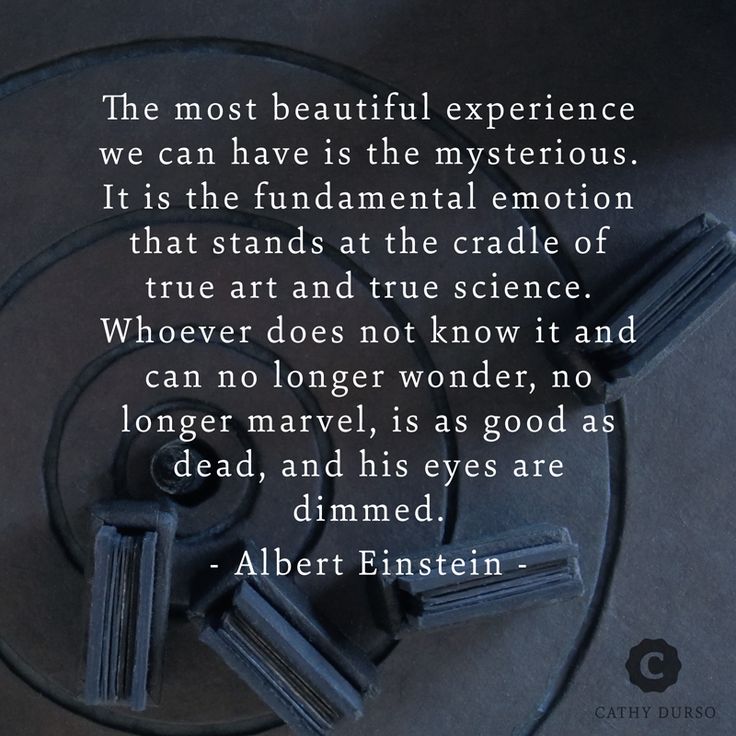
The theme for this week was mystery, and the quote I chose is another one from the brilliant mind of Albert Einstein:
The most beautiful experience we can have is the mysterious. It is the fundamental emotion that stands at the cradle of true art and true science. Whoever does not know it and can no longer wonder, no longer marvel, is as good as dead, and his eyes are dimmed. – Albert Einstein
This lovely quote pretty much sums up why I’m so fascinated by both art and science, so for this challenge, I decided to write a free-verse poem inspired as much by Einstein’s words as by my own experience as an “artistic scientist”. Enjoy!
Artistic Scientist
With the mind of a scientist
And the heart of an artist,
I look around me
And I can’t help but wonder:
How does a world
That we’ve known for so long
Still have so many mysteries
Yet to be solved?
Why are we so fascinated
By the world we live in?
What drives humans to discover,
To learn, to know more?
How do the colors and shapes in nature,
In the land and the sea and the sky,
Inspire us to create
Such beautiful works of art?
How do so many animals
That seem so simple
Have such perfect designs
And sharpened instincts?
How does a dog or a cat
Know exactly when to comfort you,
To nuzzle up against you,
Like it senses the pain in your heart?
Why are we always seeking happiness
Yet unable to live without suffering?
Why do dreams so often show you
Secrets you didn’t know you had?
What’s swimming deep down
In the depths of our oceans?
What’s lurking out there
In the great space beyond?
Is there a higher power
Somewhere far above us,
Existing just beyond the boundaries
Of our known limited world?
And how can we humans
Think ourselves so grand
While being mere specks
In the vastness of the Universe?
Mind of a scientist,
Heart of an artist,
I see so many questions
Still longing for answers,
And I smile as I think how
The world is full of
Beautiful discoveries
Just waiting to be made.
So don’t shy away
From the wonders of the world.
Marvel at the mysteries of life,
Lest your eyes become dim,
And you someday find yourself
As good as dead.
Embrace that artistic scientist in you,
And you’ll discover that
In true science and true art,
The most beautiful
Experience we can have
Is the mysterious.
Here’s a funny example of a word I actually learned through a mix-up that changed the entire meaning of the sentence, in this case from an episode of the popular sitcom Frasier. After Niles’s ex-wife Maris accidentally kills her lover, Niles and his family find themselves in the middle of a media storm that turns their lives upside down. In an attempt to clear his brother’s name, Frasier offers to give a statement on the news claiming that Maris and Niles should soon be freed from all accusations. Unfortunately, he only makes things worse when he gets his words muddled up and accidentally uses “execute” in place of “exonerate”!
To “exonerate” someone is to free them from blame for a crime or other wrongdoing, especially as an official act by a body of authority. The word arose in late Middle English and comes from the Latin verb exonerare, meaning “to free from a burden”. This verb comprises two roots: the preposition ex “from” and the noun onus “burden”.
The main definition of “exonerate” refers to an official release from guilt, though it can also be used more informally in the sense “to release someone from a duty or obligation”. If you ever need to free your characters from blame or some other burden, “exonerate” is a good word to keep on your list. Just be careful not to get your words mixed up, or your characters could be in for some serious injustice!
[enter Niles and Daphne, looking unamused]
Frasier: Oh, Daphne, Niles. Listen, I’m so sorry about today’s little gaffe. You know what I meant.
Daphne: Oh, don’t worry. Anyone can make a little slip. We know you were only trying to ruin our lives- I mean, help.
What are your thoughts on this word? Any suggestions for future “Word of the Week” featured words?
J.C. Wolfe is a fiction writer, biologist, and aspiring novelist of science fantasy and romance. A natural-born American and graduate in Marine Ecology from a university in Brazil, J.C. now writes for a living in California while spending free time blogging and penning stories and poetry.
J.C. Wolfe is a participant in the Amazon Services LLC Associates Program, an affiliate advertising program designed to provide a means for sites to earn advertising fees by advertising and linking to Amazon.com.

 What if… the entire European continent had developed a unified culture?
 This one is a bit obvious, but it deserves to be pointed out nonetheless. You choose your friends based on how much you like them, and that depends on how much you enjoy spending time with them. Logically, the same principle should apply to romance: if you like being with your partner, you make an effort to prolong your relationship. One of the great advantages of starting out as friends is that you already know you like each other by the time you get together. When you already have fun together and make each other laugh often, the romance simply enhances an already beautiful connection. It’s like fast-forwarding through the awkward getting-to-know-you phase to the actual fun part of a relationship! Admittedly this might not be to everyone’s taste, but I highly recommend it. It worked for my parents, and it’s certainly working for me!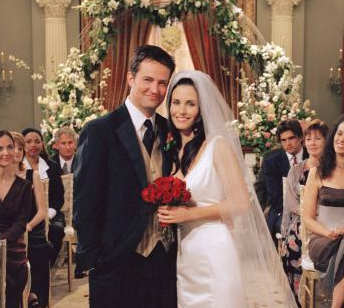
 For all the above reasons and more, lovers who started as friends are more likely to stay together for life. Friendship is the most solid foundation for love because life is most enjoyable when shared between two people who enjoy talking to each other, often make each other smile, understand each other well, and value each other for who they truly are. So try exploring this kind of love in your romantic stories, and maybe if you’re as lucky as my parents, you too will discover (or perhaps already know) that the best romance is based on friendship!


Recent Comments