by Naomi L. | October 30, 2013 | Blog, Creative Writing, Motivational Music |
After recently spending hours listening to music on YouTube, I was inspired to write another Motivational Music post. Following the debut post about ambient/post-rock music, the genre featured in today’s topic is one that I’ve enjoyed since I can remember: classical. This type of music has been great inspiration for some of my writing in the past, especially poetry (since I like to think of classical music as poetry created with sound). I don’t want to go into “pretentious mode” and pretend to have a Music-major’s extensive knowledge of the genre, though, so for my first post on the subject, I’ll just scratch the surface with a few well-known Classical-era composers: Mozart, Beethoven and Bach.
Wolfgang Amadeus Mozart
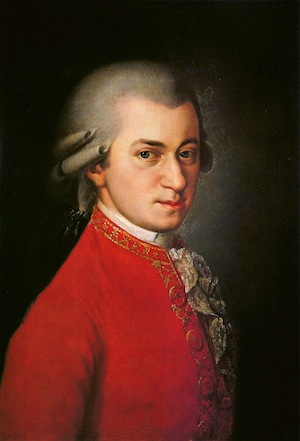
Wolfgang Amadeus Mozart (1756-1791)
Genre(s): Classical
Origin: Salzburg, Austria
Writing Inspiration: Poetry, humor
My Favorite Song(s): “Rondo Alla Turca” (Piano Sonata No. 11), “Symphony No. 40”
When thinking of classical music, one of the first names that comes to mind is Mozart, and with good reason. From piano sonatas to orchestra symphonies to operas, his music is wonderfully melodic and an absolute delight to listen to. Though I do enjoy the grander compositions like his 40th symphony, my favorite pieces of his are the lighter sonatas and arias, such as “Rondo Alla Turca” (the last movement of his 11th piano sonata, also known as the Turkish March) and the Queen of the Night aria (from the opera The Magic Flute).
What I find so enjoyable about Mozart’s music is the way it bounces, like the notes are floating on a breeze. Back when I took vocal lessons, I had to learn his piece “Das Veilchen” (“The Violet”), and though it was difficult to sing in German, I still enjoyed it for the bright melody. That’s why I find Mozart inspirational not just for poetry, but for humorous writing. Even when I’m not writing, I like to listen to his compositions just because they put me in a good mood. Whether it’s a grand symphony or a simple piano solo, there’s something about Mozart’s music that always brings a smile to my face.
Ludwig van Beethoven
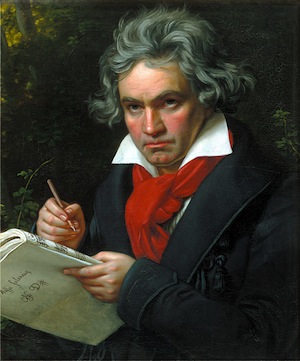
Ludwig van Beethoven (1770-1827)
Genre(s): Classical (Romantic era)
Origin: Bonn, Germany
Writing Inspiration: Poetry, drama, romance
My Favorite Song(s): “Symphony No. 5“, “Für Elise” (Bagatelle No. 25)
Yes, Beethoven is one of those composers whose music I could listen to all day. While I appreciate Mozart for his upbeat pieces, I enjoy Beethoven for his bold and powerful symphonies, which make excellent inspiration for dramatic writing. I sometimes listen to his fifth symphony when trying to get into a mindset for heavier scenes full of action or strong emotion (as demonstrated beautifully in this segment from Disney’s Fantasia 2000). Of course, the composer wasn’t limited to intense symphonies; one of his most famous pieces is the lovely piano bagatelle “Für Elise”, which contrasts with his more elaborate compositions for its soft and romantic melody.
Beethoven was an important figure in the transition between the Classical and Romantic eras of music, so it stands to reason that his pieces comprise a diversity of sources for writing inspiration, from poetry to drama to romance. Honestly, I find his music so inspiring that I’d recommend it not just to writers, but to artists of any type. If you appreciate music at all, you should have at least one composition by Beethoven in your music player. It’s definitely worth it.
Johann Sebastian Bach
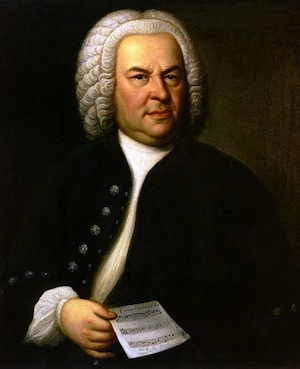
Johann Sebastian Bach (1685-1750)
Genre(s): Classical
Origin: Eisenach, Germany
Writing Inspiration: Poetry, drama
My Favorite Song(s): “Little Fugue (in G minor)“, Cello Suites
While Bach is admittedly not my favorite classical composer as far as concertos, I do enjoy his more subtle music. His cello suites are very beautiful and soothing (especially as performed by Yo-Yo Ma), and I find the slow melodies inspiring for writing drama and romance. My favorite piece, however, is definitely his “Little Fugue (in G minor)”; the music builds up as the different parts blend into each other to create a beautiful harmony, which I enjoy listening to while writing poetry or drama. Fun fact: this piece was adapted for the Dreamworks movie Shrek Forever After, where it plays as a club track (“Rumpel’s Party Palace“) in Rumpelstiltskin’s castle!
Though most of my favorite classical pieces are by Mozart and Beethoven, I find some of Bach’s music just as inspirational for certain forms of emotional writing. At the very least, I’d recommend his cello suites as background music for relaxing, as that can really help make the creative process easier!
Classical music is wonderful to listen to, as much for entertainment as for writing inspiration. Whether you write poetry or prose, comedies or tragedies, you can probably find inspiration in a good classical piece. I hope you enjoy the music I’ve shared with you today, and that you find in it the inspiration you need for your own art! Thanks for reading/listening!
by Naomi L. | October 23, 2013 | Blog, Creative Writing, Featured |
Remember the elementary school days when our teachers introduced us to those trusty reference books that would guide us through our writing? These were the friends we would come to rely on for the rest of our lives, the books containing so many of the answers we would need to survive our school years. The dictionary told us what those long words we’d never seen before meant. The atlas helped us find those faraway places we’d heard about in Geography class. There were encyclopedias and almanacs full of facts that came in handy for homework assignments. And then there was that book that gave us lists of synonyms and antonyms for the words we wanted to use in our writing: the thesaurus.
This last book is an interesting case, though, because unlike the others, it has the same potential to hinder as it does to help. Yes, the thesaurus is a top go-to resource for many writers, especially beginners looking to enhance their work. However, something our teachers may have neglected to tell us is that the guide comes with unwritten instructions: use knowledgeably.
Trustworthy/reliable friend/ally?
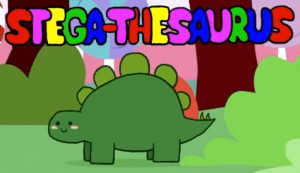
“Hooray yay for synonyms!”
(Screenshot from RubberNinja‘s Gameoverse videos)
When we were first introduced to the thesaurus, we were taught that it’s a great resource for helping to expand our vocabulary, and that’s true. I can’t even count how many new words I’ve learned just by looking up synonyms for ones I already knew. Every time I work on my stories, I have my dictionary/thesaurus widget handy to help me find replacements for words that would otherwise be repeated too soon in the narrative. It even helps me remember advanced vocabulary that I may have forgotten (which happens more often than I’d normally care to admit).
A good use of a thesaurus is as a reverse dictionary. You know how sometimes you know exactly what you mean to say, but you just can’t find the right word for it? Well, all you have to do is look up more common words for the definition you want and see what options come up. True, this method may not be as effective as using an actual reverse dictionary, which has full definitions and cross referencing, but it’s still a convenient alternative to find simpler examples, especially for writers who don’t have access to a more complete guide.
So yes, writers, the thesaurus is your friend. It will save you from plain and repetitive writing, and can teach you a thing or two (or ten) in the vocabulary department. But be warned, because placing too much trust in this guide can have negative consequences as well…
Or dubious/suspicious enemy/foe?
So how could this dependable friend of ours also be a hazard to our writing? Instead of launching into a dissertation about the dangers of overusing a thesaurus, allow me to illustrate the point instead with an example from the popular TV series Friends. In this episode, Joey wants to write a letter of recommendation for Monica and Chandler, who are planning to adopt. When he mentions that he wants to make it sound smart, Ross suggests he use a thesaurus to replace plain words with advanced ones. Unfortunately, the results are less than satisfactory…
Joey: Hey, finished my recommendation. (hands a letter to Chandler and Monica) Here. And I think you’ll be very, very happy.
[…]
Chandler: I don’t, uh, understand.
Joey: Some of the words a little too sophisticated for ya?
Monica: It doesn’t make any sense.
Joey: Of course it does! It’s smart! I used a the-saurus!
Chandler: On every word?
Joey: Yep.
Monica: All right, what was this sentence originally?
Joey: Oh, “They are warm, nice people with big hearts”.
Chandler: And that became “They are humid, prepossessing Homo sapiens with full-sized aortic pumps”?
Joey: Yeah, yeah. And hey, I really mean it, dude.
– Friends (Season 10, Episode 5 – The One Where Rachel’s Sister Babysits)
As you can see, Joey’s overuse of a thesaurus causes him to turn out a ridiculous stream of long words that have nothing to do with what he wants to say. While Ross’s advice may have been good in theory, he probably should have warned Joey not to go straight for the “smartest sounding” word every single time. The problem wasn’t just that his letter would come out overly “purple“, but that there was an important tip he neglected to keep in mind when choosing synonyms: context is key.
A notable example of a misused synonym in the above dialogue is “humid”. As we all know, while “warm” and “humid” have comparable definitions when it comes to describing the weather, only “warm” is also applicable to people. A similar problem happens with the use of Homo sapiens, which is only good for scientific writing and doesn’t really work as an alternative for “people”. With all these big words so out of place, it’s no wonder Monica and Chandler couldn’t understand anything Joey had written!
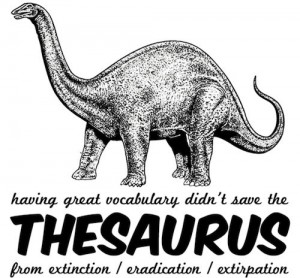 But there’s another problem with placing too much trust in a thesaurus. Although the purpose of the guide is to index words with similar definitions, there’s a catch: the “synonyms” that come up don’t always have the exact same meaning. This means you should always be aware of the full definition of a word before you try to pass it off as a replacement for a more common one, advice that many writers fail to take into account.
One particularly embarrassing example of this practice from my own experience is when I used the word “fortuitous” incorrectly in a story. My thesaurus listed it as a synonym for “random”, but what I didn’t realize until after publishing the piece was that while “random” is a neutral word, “fortuitous” usually has a positive connotation (as in “good fortune”), which was not the feeling I intended to convey. Fortunately, no one ever called me out on it, but it was still embarrassing to know the mistake was out there for anyone to see. So to be safe, make sure you look up the definition of a synonym before you use it in your writing. You’ll be glad you did.
A thesaurus can be a friend or an enemy, depending on how much faith a writer is willing to invest in it. While its uses are mostly beneficial, it’s up to you to make sure that this trusted ally doesn’t turn on you and muddle up the meaning behind your words. It’s OK to trust your thesaurus to help you enhance the vocabulary in your writing. Just try not to use it in excess!
Monica: Hey, Joey, I don’t think we can use this.
Joey: Why not?
Monica: Well, because you signed it “Baby Kangaroo Tribbiani”.
What about you? Do you make good use of your thesaurus? Has it been more of a help or a hazard to your writing?
by Naomi L. | October 16, 2013 | Blog, Creative Writing |
It’s that time again: time for another round of Writers Reveal! This week’s topic was sent to me by the host of the event, Emily Morgan, who suggested the prompt “the eyes of my enemy”. From that idea, I decided to write a short piece about an issue that many young people face at some point in their lives. I hope you enjoy what I’ve written. Thanks for the topic, Emily!
The Eyes of My Enemy
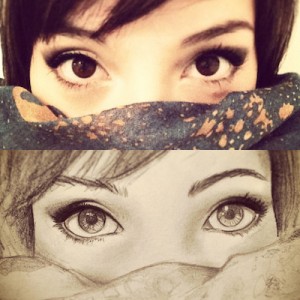
(Image used with permission from @angellastrucci. Check out her Instagram page for more amazing drawings!)
“You suck.”
“Shut up.”
“I mean it. That’s total crap. You think anyone’s gonna like that?”
“I said shut up.”
Every day was the same. I had to put up with an endless torrent of abuse from her, my worst enemy, with no ammunition to fight back. She had a power over me that I couldn’t overcome, that I hadn’t been able to overcome for years. She was the only one I couldn’t stand looking at. And I had to see her every single day.
“Good luck.” Her sarcasm burned like acid in my fragile mind. I wanted to punch her, but I would only hurt myself. She was invincible.
“Bite me.” I put down the brush and walked out the door.
The rest of the day wasn’t usually so bad. After each of our encounters, I would simply try to forget about her and go on living my life. But lately I had been finding it harder to push her from my thoughts. The more she tried to bring me down, the more confidence I lost in myself. And the more confidence I lost, the more she managed to bring me down. It was a vicious cycle, and I couldn’t take it much longer…
By the end of that day, I had somehow ended up in tears. Having finally reached my breaking point, I was ready to confront her for dragging me down to this level. I stormed into the room where I knew I’d find that girl always waiting to tear me down.
But she wasn’t there.
Instead, I found a different girl looking back at me, a girl I had never seen before. She looked vulnerable, nothing like the empowered enemy I had known for so long. In fact, I wouldn’t have recognized her…
…were it not for her eyes.
Something in those dark brown eyes spoke to me, telling me I wasn’t alone, that she had always been just as sad and scared as I was. And suddenly I realized what I should have done right from the start. I smiled at her and whispered…
“You are beautiful.”
For it was the first time that I saw myself in those eyes. The real me, not the girl who disapproved of herself and wished she had more to offer the world. All she wanted was to be loved. I took a step forward and pressed my hand against the glass. She pressed her hand against mine.
“This is ridiculous!” I laughed. “You’re beautiful! You’re smart! You’re a good person! And you deserve love.”
Her smile warmed my heart. I saw her bitter persona fade away to reveal the good soul underneath. The girl I couldn’t stand was gone, and in her place stood a girl who I would be happy to see every single day for as long as I lived.
With a newfound confidence, I turned and walked away with my head held high. She turned in perfect unison with me and disappeared into the void.
I would never see my enemy again. From that point on, I would look into the mirror, straight into those beautiful eyes, and see only myself.
She used to be my worst enemy. But now, as she’ll be for the rest of my life, she is my best friend.
This has been a special topic post in Emily Morgan’s Writers Reveal. To learn more, just follow the button below to her site, and be sure to check out the other blogs participating in the event. Thanks for reading!

Other bloggers in the Writers Reveal
Melissa Khalinsky: Melissa Writes
Jodi Gibson: JFGibson
Becky Fyfe: Imagine! Create! Write!
Josefa: Always Josefa
Rhianna: A Parenting Life
Ashley Howland: Ghostnapped
Emily Hawker: You Learn Something New Every Day
by Naomi L. | October 9, 2013 | Blog, Creative Writing, Featured |
The new Romeo & Juliet movie is coming to UK and US theaters this Friday (which I admit makes me totally jealous, since there’s no set release date for where I live yet). In the spirit of celebrating one of William Shakespeare’s most famous plays, today’s topic is centered around this classic tale of love, fate and tragedy.
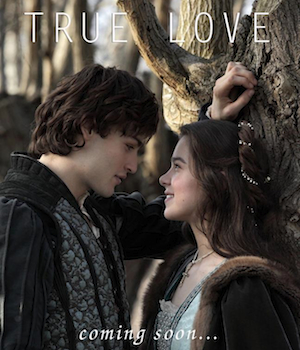
Douglas Booth and Hailee Steinfeld as Romeo and Juliet
Now I’m going to make a confession: I absolutely love this story. I love any story about forbidden love (as long as it’s well-told), and being the epitome of such a tale, Romeo & Juliet may be one of my favorites. In fact, I love it so much that I’ve read scenes several times over (yes, I read Shakespeare for fun, believe it or not), have actively sought out a fair share of adaptations, and have even used it as inspiration for my own romantic fiction.
But don’t mistake me for a silly fangirl. For the longest time, I believed the common interpretation that Romeo and Juliet were no more than two immature teenagers who recklessly rushed into a superficial relationship at the ultimate expense of their families and the rest of Verona. It wasn’t until I started researching in-depth analyses of the story (again, for inspiration) that I came to understand what I was missing in Shakespeare’s timeless classic, and what most modern readers/viewers might be missing too.
So to set your impressions straight before you head out to see this movie, here is a list of five points in Romeo & Juliet that you probably never noticed before. Get ready to see another side of this story!
(Warning: the following list contains possible spoilers for Romeo & Juliet. If you’re one of the few people on the Internet who are not familiar with this tragic story, proceed with caution. Or you can just read a full summary of the plot here.)
1) Rosaline is an important character
Before Romeo meets Juliet and falls desperately in love with her, he actually has his sights set on a different girl: Rosaline. In fact, his very first appearance in the play has him moping to his cousin Benvolio about the unrequited love he claims to feel for this unseen lady, and he even agrees to crash the Capulet ball with his friends just for the chance to see her.
But other versions of the story tend not to place very much importance on Rosaline. Most adaptations don’t even give her a face, and some exclude her character altogether, instead providing a different explanation for the Romeo character’s depression before he meets his Juliet (e.g. West Side Story: Tony longs for excitement in his life, which he finally discovers upon meeting Maria). This common alternative likely stems from the assumption that Rosaline’s only purpose in the original story is to lure Romeo to the ball so he can cross paths with Juliet, a plot point that can be easily worked around (continuing from the previous example, Tony first encounters Maria at a local dance that he only agreed to attend as a favor to his best friend).
Yet Rosaline actually plays a much greater role than a mere plot device. While pining for her, Romeo has a preconceived notion of what it means to be in love, and acts according to the lessons he’s learned from the hackneyed romantic poetry he likes to recite when thinking of her. At the first sight of Juliet, however, he abandons every thought of his former clichéd infatuation in favor of a much deeper passion that sparks some incredibly beautiful and original love poetry from his own heart (which, when you think about it, may have been Shakespeare’s way of saying “Take that!” to the poets before his time). To put it simply, the switch from Rosaline to Juliet is essential to highlight the main characters’ true feelings for each other by showing the audience the difference between Romeo thinking he’s in love and Romeo actually being in love.
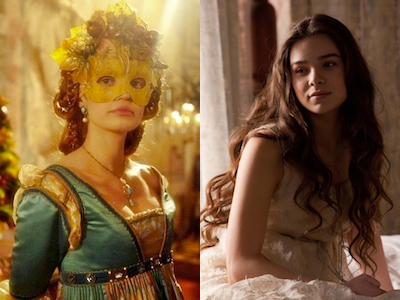
Seriously, did Rosaline ever stand a chance against Juliet?
What you’re probably thinking: He takes one look at Juliet and forgets about Rosaline just like that? Damn, Romeo is so superficial!
What you should be thinking: Wow, Juliet inspires such beautiful passion in Romeo! He must really love her!
2) Mercutio’s Queen Mab speech is a warning
One of the many famous monologues in Shakespeare’s works is the Queen Mab speech delivered by the bold Mercutio in Act 1, Scene 4 of Romeo & Juliet. This is the scene in which he teases Romeo for pining after Rosaline and tries to break his illusions of love by delivering a lecture about the dreams of men and how they can ultimately lead to ruin. Sound familiar?
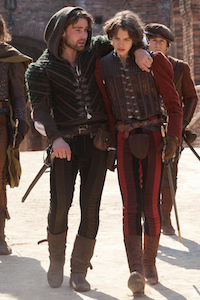
“True, I talk of dreams,
Which are the children of an idle brain” (1.4.97-98)
Mercutio starts by talking about Queen Mab, the mythical fairy queen who rides through the night bringing pleasant dreams tailored to every sleeping individual. But as he goes on, the lighthearted speech quickly takes a morbid turn into a downward spiral through darker visions of depravity (from lovers dreaming of romance to soldiers dreaming of killing), until finally culminating in a bitter yet accurate portrayal of society. Instead of taking from the speech a lesson about realism and the twisted nature of humanity, however, the idealistic Romeo simply disregards his friend’s words as another of his many mischievous taunts, silencing him with a single exasperated comment, “Thou talk’st of nothing.”
Like Romeo, modern audiences might be inclined to dismiss the Queen Mab speech as unnecessary rambling that contributes little to the rest of the story. Indeed, the monologue’s main purpose is to illustrate Mercutio’s wit and roguish nature, but it can also be interpreted as a critique against the romantic ideals that drive the play’s entire plot. In a way, Mercutio’s speech is foreshadowing the tragedies that will occur over the course of the story, and while it isn’t necessarily important, it certainly adds an interesting subtext to the themes of Romeo & Juliet.
What you’re probably thinking: Man, Mercutio really likes to hear himself talk!
What you should be thinking: Mercutio knew a thing or two about realism. Romeo probably should have listened…
3) Paris and Lady Montague even the score
Remember that part near the end of the story when Romeo kills the Count Paris in the Capulet tomb, and that other part when Montague says his wife died of grief after their son was banished from Verona? No? Then you must be familiar with any version of Romeo & Juliet other than the original play itself.
The fact is, most adaptations of this play tend to exclude the deaths of Paris and Lady Montague because they don’t contribute very much to the plot. The latter even goes virtually unnoticed, her offstage death being summed up in only two lines. So why would the playwright even bother killing these characters off in the first place?
Because it’s only fair. Before Romeo and Juliet famously take their own lives at the end, two other important characters suffer dramatic deaths in the middle of the story: Mercutio and Tybalt. But wait, wasn’t Mercutio on the Montagues’ side? Yes, but he was not a member of their family, as Tybalt was of the Capulets’. Mercutio was actually from the third noble family in the play: the Prince’s. This means that after all four of these characters die, the House of Capulet would technically have suffered the greatest loss.
Unless one more family member were to be lost from each of the other two houses. Enter Count Paris and Lady Montague. Paris, though aligned with the Capulets, is another kinsman to the Prince, and ends up being killed in a fight with Romeo during his visit to Juliet’s tomb while she’s faking her death. A little later, after the bodies are discovered in the tomb, the Prince calls forth the heads of the feuding households, at which point Montague accounts for his wife’s absence by explaining that the news of her son’s banishment ended up killing her.
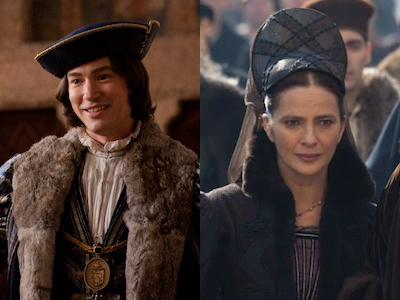
Surprise: one of them might not survive the movie this time. Guess who.
Final death toll:
- Capulets – 2 (Juliet and Tybalt)
- Montagues – 2 (Romeo and Lady Montague)
- Prince – 2 (Mercutio and Paris)
Conclusion: everyone loses, but at least in perfect balance.
What you’re probably thinking: Six people die by the end of the story? Shakespeare was twisted! No wonder most newer versions cut out these deaths!
What you should be thinking: Wow, every house loses two loved ones? How sad!
4) The poison and the dagger are symbolic
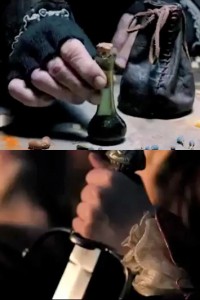
Romeo: “Thy drugs are quick. Thus with a kiss I die.” (5.3.120)
Juliet: “O happy dagger,/ This is thy sheath. There rust and let me die.” (5.3.169-170)
If there’s one thing for which Shakespeare was notorious, it was his innuendos. Plenty of his works contain their fair share of double entendres and the like, and Romeo & Juliet is no exception. However, instead of covering every example in the play (which would take a while, especially for scenes involving Mercutio), let’s just skip ahead to the one hidden in the famous double suicide ending.
You know how Romeo kills himself by drinking poison when he thinks Juliet is dead, and then Juliet stabs herself with Romeo’s dagger after she finds his body? Well, guess what: those two items are not random, but were carefully chosen to secretly represent the lovers’ intimate relationship. Romeo’s weapon of choice comes in a cup, which is a symbol of femininity. In contrast, Juliet uses a blade, a symbol of masculinity, to take her own life. In this way, their deaths are meant to reflect the intimacy they shared in life, thus completing the play’s theme of love ending in tragedy.
Or it’s all just another product of Shakespeare’s deviant mind, depending on how you choose to read into it.
What you’re probably thinking: Shakespeare must have been a misogynist, to have Juliet suffer a much more painful death than Romeo.
What you should be thinking: Even their deaths symbolize their intimate love. Shakespeare was clever with metaphors.
5) Romeo & Juliet is a coming-of-age story
Now I know what you might be thinking: how can Romeo & Juliet be a coming-of-age story if the entire plot only happens over four days? Perhaps it’s not a coming-of-age story in the traditional sense, as the teenage protagonists never actually reach adulthood, but their characters do mature throughout the course of the play, from the moment they meet to their untimely end.
At the beginning of the story, Romeo and Juliet are little more than naïve adolescents, both fairly inexperienced in life and in love. As soon as they first cross paths, however, they quickly propel each other toward the maturity of adulthood. Upon meeting Juliet, Romeo sheds his superficial conceptions of romance to become one of the most truly passionate lovers in all of English literature, and it is this passion that drives his actions for the rest of the play. Juliet, in turn, draws strength from her love for Romeo to develop into a confident and levelheaded young woman, making shrewd observations (“You kiss by th’ book”) and logical decisions that balance out her lover’s spontaneity. The intense love that outweighs the hatred around them makes their marriage all the more pure, and their loyalty to one another drives them to choose an eternity together in death over a miserable life alone. In short, though modern interpretations mistake these young lovers for foolishly infatuated teenagers, in-depth analyses reveal the true qualities of their complex characters, bringing to light the real depth of Shakespeare’s classic story of “death-marked love”.
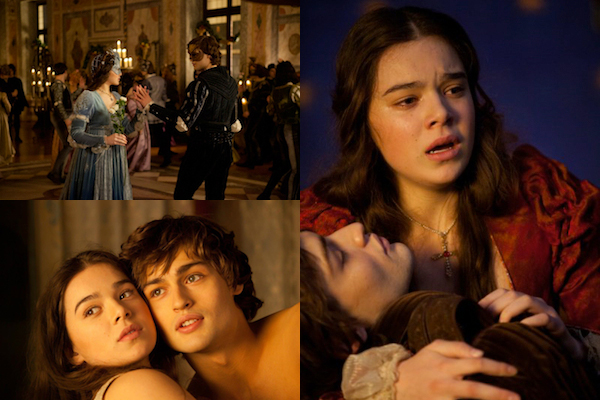
“For never was a story of more woe
Than this of Juliet and her Romeo.” (5.3.309-310)
What you’re probably thinking: They rushed into marriage after less than a day and then killed themselves because they couldn’t live without each other? Romeo and Juliet were so immature!
What you should be thinking: They were so young and they experienced such a grand romance. Romeo and Juliet were truly in love!
All caught up on these secret details?
Great! To leave you on a high note, here is the official trailer for the 2013 release of Romeo & Juliet (the original UK trailer can be found here). Enjoy!
[youtube=http://www.youtube.com/watch?v=Gp9yaZcrtnU]
Reasons I have high hopes for this movie:
- A screenplay adapted by Downton Abbey creator Julian Fellowes
- A stellar cast featuring talents such as Hailee Steinfeld, Douglas Booth, Ed Westwick, Damian Lewis and Paul Giamatti
- Good chemistry between co-stars Hailee Steinfeld and Douglas Booth
- Shot entirely on location in Verona and Mantua, Italy
I hope you’ve enjoyed reading about the secrets hidden in Romeo & Juliet! I understand that many will disagree with some of these points, but honestly, I think that’s part of the beauty of this tale: that it can be interpreted in so many different ways. To some, it’s a tale of love thwarted by fate; to others, it’s a warning about the dangers of being too impulsive. In any case, I’m sure we can all agree that this classic story has greatly endured the test of time, and will probably continue to intrigue admirers of Shakespeare and inspire the romantic at heart for generations to come.
On a final friendly note: kids, trust me when I say you do not want a romance like Romeo and Juliet’s! Yes, this is a beautiful story and a great one to read and learn from, but the story you want to live is that of Grandma and Grandpa, who had a life and grew old together. It’s important to know the difference!
Oh, and if anyone from the UK or US happens to watch this film, please let me know if it’s good. I’m very much looking forward to it. Thanks for reading!
(Disclaimer: All images and video in this blog post are courtesy of Swarovski Entertainment and Amber Entertainment. For news about the film, follow them on Facebook and Twitter. I own nothing; I’m just a fan hoping to spread the love. Thank you!)
by Naomi L. | October 2, 2013 | Blog, Creative Writing |
One of my favorite things about cinema is finding analogies in movies that are applicable to the real world. In much the same way I relate to the characters I read about in books, I often notice themes and metaphors in films for patterns I see in my life. Disney princess films showed me the (sometimes admirable, sometimes flawed) standards that women are expected to live up to; movies like How to Train Your Dragon touch on such subjects as the hidden value in an awkward youth who doesn’t quite fit in (the tried and true zero-to-hero plot) and the open-mindedness to see the world in a new light; and even films like Avatar appeal to my biologist side for the often clichéd but still valid theme of how the natural world is mistreated by the human race in general.
One interesting example I’ve found of an analogy for my creative side is from the 2010 movie Black Swan, which seems to reflect two different sides of my writing: technique and emotion. Of course, to understand this comparison, one first needs to be familiar with the story…
Rise of the Black Swan
As many are surely aware, Black Swan is an award-winning psychological thriller film, directed by Darren Aronofsky and starring Natalie Portman, Vincent Cassel, and Mila Kunis. The movie tells the story of Nina Sayers, a ballet dancer who is up for the highly coveted lead role of the Swan Queen in her company’s upcoming production of Swan Lake. In the beginning of the movie, the director, Thomas Leroy, is looking for a dancer who can embody both sides of the ballet’s main character: the delicate, innocent White Swan; and her sensual “evil twin”, the Black Swan. Thomas assures Nina that her flawless technique makes her a perfect match for the White Swan, but she must learn to let go of her inhibitions and release her emotional side in order to embrace the passion of the Black Swan. Despite her poor audition, the director sees enough of a spark in her to cast her as the Swan Queen, though he continues pushing her to bring out the fire he glimpsed when she asked for the part. The pressure of living up to her role proves incredibly stressful for Nina, and she soon finds herself transforming from her innocent White Swan persona into the dark Black Swan as she tries so hard to be “perfect”.
What really intrigued me about this film was seeing the contrast between the two Swans in creating the character of the Swan Queen. Though here they represent opposing sides of Nina’s personality, I find that they prove to be a good analogy for any form of art, which often requires a decent balance between both: the technique of the White and the emotion of the Black. In fact, the first comparison I made between the movie and my real life was not about my writing, but my singing. Back when I used to take vocal lessons, I focused so much on achieving technical perfection that I found it difficult to emote, for fear of losing that ideal sound. It wasn’t until later that I realized how applicable the concept was to all my other experiences in art, including – and perhaps especially – creative writing.
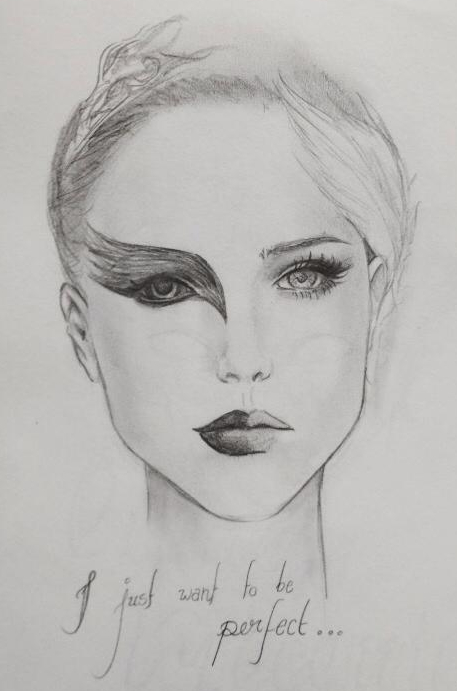
Natalie Portman as the Black and the White Swan
(Image used with permission from @angellastrucci. Check out her Instagram page for more amazing drawings!)
From Black to White
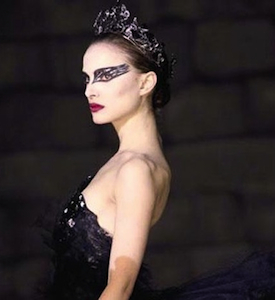 Interestingly, in contrast to Nina’s psychological breakdown, my own transformation seemed to happen backwards. Before I started seriously considering writing as a career, I wrote mostly for school assignments and my personal enjoyment, not really expecting to show my work to anyone. As a result of this, much of my earliest writing was carefree and uninhibited, but it was also rather sloppy. I think of this period as my “Black Swan” phase, when I poured my heart and soul into my words with hardly any regard for structure and refinement. For the preadolescent me, writing was all about emotion.
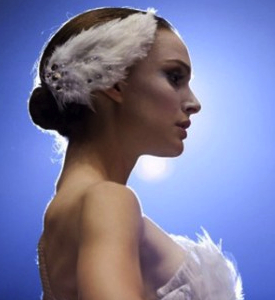 As I grew older, however, my approach to creative writing began to change. I started to pay more attention to the technical aspect of my stories, focusing on details like grammatical coherence and proper structure instead of putting pure heart into my writing. It actually got to a point where I was so obsessed with writing “correctly” that I would often write dialogue in proper language even if it wasn’t in tone with the characters involved in the conversation. Because of this, my stories started to become mechanical, lacking the spontaneity that used to come across so easily in my earlier works. This was my “White Swan” phase, when technique came first and I only worried about the feeling behind the words later. My teenage self was a technical perfectionist.
The Swan Queen
As you can imagine, neither of these approaches alone was ideal for my creative writing. Too much emotion without technique made my stories seem juvenile and amateurish, while too much technique without emotion made them stiff and a little flat. I needed to learn how to touch on both sides in order to balance my stories. In other words, I needed to learn how to play the Swan Queen.
So that’s the goal I’ve been trying to reach in my writing: balance between these two complementary elements. I still see much of the White Swan’s technique in my work, but I’m continuing to let more of the Black Swan’s emotion back into my words, in the hope of achieving the equilibrium that will make me a better writer. In a similar (albeit healthier) way that Nina strives to fully embody her character, an artist should strive to draw from both Swans and embrace the metaphorical role of the Swan Queen.
What about you? Do you see more of the Black Swan or the White Swan in your own art? Have you managed to tame the Swan Queen (or King) in you?



Recent Comments