by Naomi L. | August 24, 2016 | Blog, Creative Writing, Featured |
No Man’s Sky came out this month, ending a three-year wait for the biggest space exploration game ever made. Published by indie studio Hello Games for PlayStation and PC, the game is set in a massive open universe (read: 18 quintillion planets) that procedurally generates almost everything from star systems and planets to the alien lifeforms that occupy them. I haven’t played it myself yet, but I have been watching someone else play, and if nothing else, it’s definitely creative and makes for great artistic inspiration, in no small part for its representation of the endless possibilities in space.
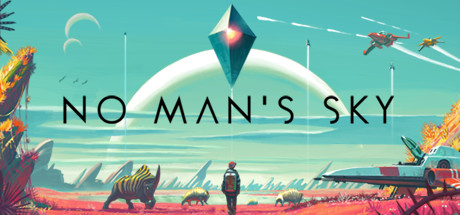
So today, I’d like to dedicate this creative writing post to that someone special who keeps on inspiring me with his passion for space. There’s a lot of creative inspiration to be found out there in the Universe, so let’s explore! Enjoy!
Tales in the Sky
Since the time of ancient civilizations, human beings have been fascinated with the stars and the mysteries hidden among them. Early cultures associated celestial bodies with divine beings and used the study of the stars to understand the phenomena of Earth, making astronomy the oldest natural science in history. Constellations have been a big part of mythology and storytelling throughout much of history, while modern science continues to make a splash in nonfiction by unraveling the great mysteries of the Universe. Whether you’re an artist or a scientist, there’s always something exciting to find in the cosmos!
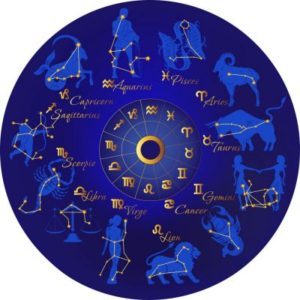
The twelve signs of the Zodiac
The stars have always inspired me with their mysterious beauty. Sometimes when I’m feeling starved for creative inspiration on a clear night, I like to look outside at the sky and get lost in daydreams (nightdreams?) about space and all the amazing things that could be waiting out there in the Universe. I’m fortunate to live in a suburban area where there’s a good view of the stars at night (not as perfect as in unpopulated deserts, of course, but much better than in big cities), so I’ve had many opportunities to enjoy open skies with countless stars and bright moons, which often make excellent inspiration for poetry. So beautiful!
Stargazing is extremely relaxing, and an excellent practice for artists who either need inspiration to overcome a creative block or simply want to unwind after a busy and tiring day. If you’re lucky enough to live in an area without too much light pollution, I recommend taking the occasional break in the evening just to gaze up at the night sky. You may find it’s exactly what you need to spark your creativity!
“To Infinity and Beyond” / “It Came From Outer Space”
Mention “science fiction” and the first images that come to mind are usually alien lifeforms, spaceships, distant planets, and intergalactic exploration. With its continuing popularity from the old Star Trek series to the new Star Wars films and beyond, outer space often seems to be the poster child of the genre, and it remains one of the most well-known themes of science fiction today.
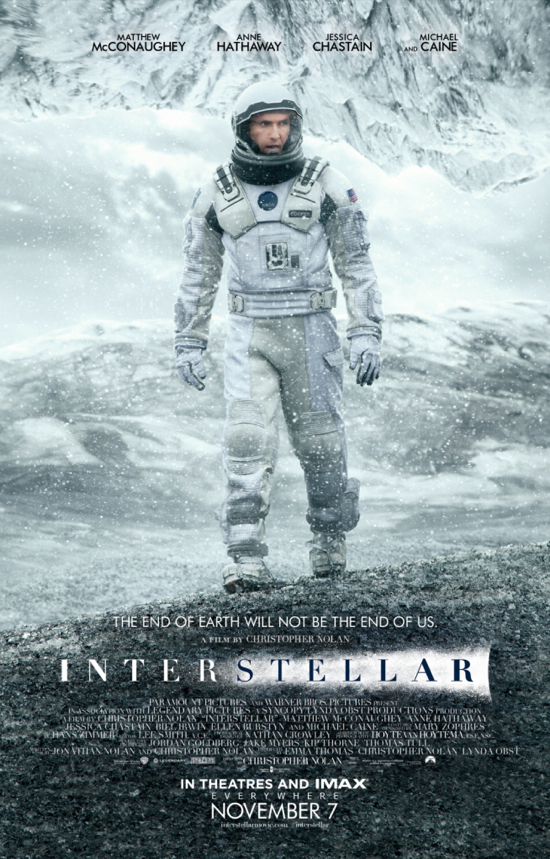
Science fiction is one of my favorite genres, and some of my favorite sci-fi stories use space travel as a major theme. Films like Interstellar and The Martian fascinated me with their use of real science to tell amazing stories, while The Force Awakens blew me away with its creative and exciting contributions to a classic sci-fi saga. A couple of the reasons I love science fiction are its infinite possibilities and its power to reconcile science and art, and some of the best examples of science fiction stories encompassing both these points are the ones with themes related to outer space.
Naturally, space-themed stories don’t always have to involve traveling outside Earth; sometimes it’s fun to imagine what would happen if space came to us instead. Alien invasions are another popular theme and often come up in lists of science fiction writing prompts. Outer space also contains plenty of dangers that could threaten life on Earth, making it a great source of inspiration for apocalyptic and post-apocalyptic fiction as well. There’s no end to the strange things that could come from outer space; the only limit is the imagination!
With all the writing ideas it provides, it’s no surprise that space is such a popular theme in science fiction. After all, why limit your stories to Earth when there’s an entire universe out there to explore?
Exploration Beyond Earth
Circling back to the introductory topic, I’ve been watching my boyfriend play a lot of No Man’s Sky lately, and I have to say it’s been quite an interesting journey so far. Mixed reviews aside (because of course there was “too much hype” around it), the game does offer a relaxing atmosphere in which creative introverts like my boyfriend and me could easily get lost for hours. We’ve enjoyed discovering different kinds of planets and especially naming the strange creatures we find together, which has turned out to be a great exercise for me as a sci-fi/fantasy writer. Maybe I’ll even use some of those alien names for a future novel!
While it may not be everything it supposedly promised to be, my impression is that part of the appeal of a game like No Man’s Sky must come from a fascination with space in general and its infinite potential stories. These don’t have to be entirely fictional, of course; another game my boyfriend loves is Elite: Dangerous, a space exploration game which, despite being set over a thousand years in the future, is heavily based on the real Milky Way galaxy, even containing a handful of real star systems alongside the procedurally generated ones. He loves how relaxing it is to explore deep space alone, and in a 1:1 scale open world galaxy, he’ll never run out of space to discover!
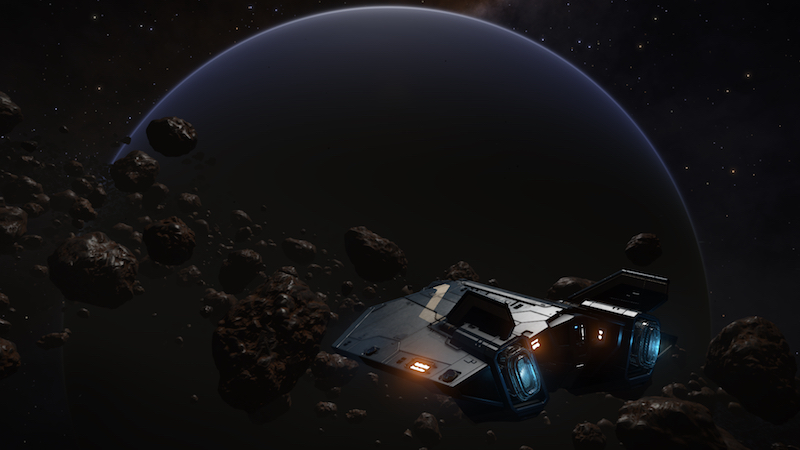
Elite: Dangerous screenshot taken by my boyfriend
From constellation mythology to science fiction to astronomy, space is full of inspiration for creative writing. Whether you’re a poet seeking that perfect verse in the stars or a speculative fiction writer doing research for your new novel, your next spark of creativity could be waiting for you among the stars. So the next time you find yourself at a creative block, why not take a break to explore the stories in the Universe? It’s the only other source of inspiration as infinite and boundless as the human imagination!
What about you? How do you find creative inspiration in space? Have you ever incorporated elements of space in your writing?
by Naomi L. | August 22, 2016 | Blog, Word of the Week |
Word: prestige
Pronunciation: pre-STEEJ
Part of Speech: noun
Definition: widespread respect and admiration felt for someone or something on the basis of a perception of their achievements or quality
Source: Oxford Dictionaries
But you wouldn’t clap yet. Because making something disappear isn’t enough; you have to bring it back. That’s why every magic trick has a third act, the hardest part, the part we call “The Prestige”.
– Cutter, The Prestige (2006)
Since I covered magic in last week’s vocabulary post, why not continue on that theme with a related word this week? The above excerpt may seem like an odd choice of example for the given definition of today’s Word of the Week, but I promise there is a connection. The Prestige, a 2006 mystery/thriller film about a dangerous rivalry between two magicians, takes its title from the original usage of the word, which was not so much about reputation as it was about illusion. So perhaps it does make sense that this archaic meaning morphed into the definition we know today; it is, after all, only our perceptions (and in some cases, delusions) of quality that give others their “prestige”!
“Prestige” is admiration and respect felt for something or someone based on a perception of their quality or achievements. The word arose in the mid 17th century in the sense “illusion” or “conjuring trick” and is originally a French noun, also meaning “illusion” or “enchantment”. This noun may stem from the Latin noun praestigium (“a delusion”, “an illusion”) or the verb praestringere (“to blind(fold)”, “to dazzle”).
As hinted above, the word “prestige” has undergone an interesting transformation. What started out as a word for magic tricks and illusions eventually underwent a transference of meaning through the sense “dazzling influence” or “glamour” to become the term for respect and admiration that we know today. The original definition has since become obsolete (read: appropriate for historical writing), while the modern definition seems to appear most often in the adjective form “prestigious”. It’s worth noting that despite their similarities in meaning and phonetics, “prestige” actually has a different root than “prestidigitation”, though at least you could use the latter to remember the old definition for the former. If your characters are revered for their (supposed) merits or are simply masters of illusion, there may be room for plenty of “prestige” in your stories!
What are your thoughts on this word? Any suggestions for future “Word of the Week” featured words?
by Naomi L. | August 17, 2016 | Blog, Creative Writing, What If? Writing Prompts |
As I enter the incredibly hectic final stretch of a major chapter in my life, I leave you all this week with some more “What If?” Writing Prompts to help tide over my creative writing posts. Someone recently expressed interest in the last set of love and peace prompts that I shared, saying they were good positive stimuli in such a negative world, so in the face of the media’s constant storm of bad news, please enjoy another batch of feel-good prompts for your writing. What positive stories can you spin from these ideas? Have fun!
 What if… in the future, war became a subject exclusively of fiction and history books?
What if… technology were only ever used to help people, never to hurt them?
What if… all nations united in an effort to end world hunger?
What if… political leaders succeeded in abolishing poverty?
What if… everyone in the world had access to affordable, high-quality education?
Good luck creating more tales about love and peace!
If you have any “What If?” writing prompt suggestions (for any theme), please feel free to share them in the comments below. Ideas I like may be featured in future “What If?” posts, with full credit and a link to your blog (if you have one)! Also, if you’ve written a piece based on an idea you’ve found here, be sure to link back to the respective “What If?” post. I would love to see what you’ve done with the prompt! Thank you!
by Naomi L. | August 15, 2016 | Blog, Word of the Week |
Word: prestidigitation
Pronunciation: pre-stə-di-jə-TAY-shən
Part of Speech: noun
Definition: magic tricks performed as entertainment
Source: Oxford Dictionaries
I know what you’re probably thinking: I gave you quite the tongue-twister for today’s Word of the Week. Though it does seem more like a spelling bee challenge than an actual practical term, I admit that I love this word just for how ridiculously purple it sounds. I happen to love stage magic (who doesn’t, right?), and yet I still had to look this word up when I first read it, because for all the times I’ve heard about “magic tricks” and “sleight of hand”, I have yet to hear anyone call this field of entertainment “prestidigitation”!
“Prestidigitation” is a formal term for magic as a form of entertainment, especially performed with the hands. The word arose in the mid 19th century and is originally a French noun, also meaning “conjuring tricks” or “sleight of hand”. This noun stems from the French adjective preste “nimble” coupled with the Latin noun digitus “finger”.
Although it certainly sounds interesting, I assume the word “prestidigitation” would most commonly be used today in an ironic sense (or as an advanced word in the aforementioned spelling bees). In fact, the last time I even came across this word was a few years ago in the title of an episode of The Big Bang Theory, notably the same episode from which I learned the word “axiomatic“. Still, nothing should stop you from using it seriously if it fits the context of your writing. If you want to take it a step further, you can also use the noun “prestidigitator” in place of “magician”, and if you need a tip to help you remember these words’ connection with magic, just associate them with the exclamation “Presto!” If you ever write characters who are magicians, you can certainly have fun detailing the “prestidigitation” in your stories!
Bonus: for those of you who’d prefer a visual example of “prestidigitation”, please enjoy this adorable and hilarious short film by Pixar!
http://www.youtube.com/watch?v=CB1Pukr0nFQ
What are your thoughts on this word? Any suggestions for future “Word of the Week” featured words?
by Naomi L. | August 10, 2016 | Blog, Creative Writing |
Fellow writers, let me ask you an important question: do you know how to use “affect” and “effect”? Now let me ask you another question: do you really know how to use “affect” and “effect”? If you hesitated at the second question, maybe it’s time to double check that particular area of your grammar knowledge. Luckily, Grammarly has you covered with their Affect vs. Effect quiz!
Confusing “affect” and “effect” is a common writing mistake; I’ve even briefly mentioned it before in my “25 words and phrases” post. To help clear some doubts about when to use which word, the folks at Grammarly have put together a blog post on the differences between “affect” and “effect”, complete with a quiz to test your knowledge! Why not give it a try right now? You may find you weren’t quite as affect-effect savvy as you thought! Good luck!
(Note: this quiz requires Javascript to work. If you can’t see it below, try following this link instead.)
So how did you do? Feel free to share your results in the comments, and be sure to check out Grammarly’s Affect vs. Effect post, especially if you didn’t score as well as you’d hoped on this quiz! Thanks for playing, and best of luck with your writing!
Today’s creative writing post is brought to you by Grammarly, the World’s Best Grammar Checker. For more information on Grammarly, visit https://www.grammarly.com/spell-check. Thanks for reading! Happy writing!
by Naomi L. | August 8, 2016 | Blog, Word of the Week |
Word: eldritch
Pronunciation: EL-drich
Part of Speech: adjective
Definition: weird and sinister or ghostly
Source: Oxford Dictionaries
Like many other writers who seek to better understand the various devices used in fiction (and/or are total nerds who enjoy getting lost in an endless vortex of information now and then), I spend much of my time browsing TV Tropes. Recently, while researching a video game I had just finished, I came across a trope known as the Eldritch Abomination, defined as a type of creature that disregards the natural laws of the universe and usually manifests as some grotesque monstrosity. Given that the creature being referred to is probably one of the most horrific and ghastly things I’ve ever seen in a video game, I’d say “eldritch” is a pretty accurate description!
Anything described as “eldritch” is weird, sinister, or ghostly. The origin of the word is uncertain; it possibly consists of the Old English root el- (“foreign” or “strange”) and the noun rīce (“realm” or “kingdom”). Another possibility is that the word is a variant of the Scottish adjective elphrish and derives from the Old English noun aelf, meaning “elf”.
When I first read about the Eldritch Abomination on TV Tropes, I actually assumed that “eldritch” was a name. I had never seen this word being used to describe something before, so I thought the trope might have been named after some character in a creepy story that I would never read or watch because I’m not a fan of horror. Having learned what the word really means, I’d now consider using it in some poetic verse or suspenseful science fiction story to describe a creature so ominous or otherworldly as to be beyond comprehension. If you like to write about beings, objects, or ideas that are strange and sinister in nature, you may have fun spinning stories around your “eldritch” creations!
What are your thoughts on this word? Any suggestions for future “Word of the Week” featured words?



Recent Comments