How about some more “What If?” Writing Prompts until I get back into my regular writing swing? I just realized I haven’t shared a set of mystery and suspense prompts in over a year, so here are some more for you to enjoy now. What strange stories can you create from these ideas? Have fun!
What if… you found a strange box in your storage unit containing a valuable piece of jewelry and a note warning of its “curse”?
What if… you woke up in an old empty house with no memory of how you got there?
What if… every time you went to sleep at night, you woke up into yesterday instead of tomorrow?
What if… there were a door in your house that kept opening by itself, no matter how many times you locked it?
What if… you kept receiving letters from someone you knew had died years ago?
Good luck spinning some more mysterious and suspenseful tales!
If you have any “What If?” writing prompt suggestions (for any theme), please feel free to share them in the comments below. Ideas I like may be featured in future “What If?” posts, with full credit and a link to your blog (if you have one)! Also, if you’ve written a piece based on an idea you’ve found here, be sure to link back to the respective “What If?” post. I would love to see what you’ve done with the prompt! Thank you!
How about learning a word from a Disney movie this week? In the above scene from Tangled, Rapunzel and Flynn have just evaded the guards in the Snuggly Duckling pub and are making their way through a secret tunnel to escape. On the way, Flynn decides to ask Rapunzel about her story, though he first builds up to his question by mentioning the questions he won’t ask, including anything to do with Pascal. When Rapunzel corrects his mistake, pointing out that Pascal is a chameleon and not a frog, Flynn dismisses it as insignificant. Pascal might disagree, of course; the difference between a frog and a chameleon is much more than a “nuance”!
A “nuance” is a subtle shade of or difference in a meaning, expression, or sound. The word arose in the late 18th century and is originally a French noun meaning “shade” or “subtlety”. This noun stems from the verb nuer “to shade”, which in turn comes from the Latin noun nubes, meaning “cloud”.
In the above example from Tangled, Flynn uses the word “nuance” as a sort of synonym for the expression “same difference”, hinting at the word’s connection with the concept of subtlety. I’ve probably read the word most often in poetic contexts, where it usually refers to the various shades of a given image or slight differences in meaning for certain ideas. Note that “nuance” can also be used as a verb to mean “give nuances to”. If you like to include subtle differences in your scenery, actions, or ideas, you may want to consider mentioning such “nuances” in your stories!
What are your thoughts on this word? Any suggestions for future “Word of the Week” featured words?
If you read my recent post about the progress on my 2016 reading goals, you may have noticed I’ve been reading a lot of period fiction this year, and it’s really been inspiring my fascination with history! I love reading stories set in the past for much the same reason I enjoy science fiction and fantasy: they show me a world I could never see or experience for myself. And what more could you want from a fiction genre?
So continuing through my “five reasons” series, here’s a list of five reasons I love historical fiction. Enjoy!
1) It offers a deeper insight into human history.
History is fascinating, but there’s only so much we can learn from textbooks and history lessons in school. It’s one thing to read facts about past events, it’s another to live them. And while living said events ourselves would only be possible with a time machine, we can at least get a taste of what they were like through the immersive experience of narrative. Action, emotion, drama, all the things that make us human have the power to make a historical account much more engaging and relatable. That’s why I feel like I learn more about history from certain fiction books than I ever did from history lessons growing up: you can only really understand the driving forces behind human history when you feel like you’re reading about, you know, actual humans!
Reading many works of historical fiction set in various time periods gives readers the opportunity to observe how human behavior has changed over the centuries. What ancient civilizations once believed to be the work of the gods, we now approach as topics of science, and several subjects that seem commonplace to us today were once considered too shocking and scandalous to even be mentioned in proper society. Human beings drastically alter their ways of thinking over generations, so indulging in historical fiction offers an entertaining means of seeing those changes: through a narrative timeline!
3) It reveals the most consistent traits of human nature throughout time.
On the other hand, historical fiction can also show us the things that haven’t changed over time. After all, no matter how far we’ve come as a species since the dawn of mankind, human beings technically still are and always have been animals. There’s a reason history tends to repeat itself, and many authors like to explore the most consistent patterns of society by implementing elements of past events into present- and future-setting stories. This is where historical fiction ties in with many futuristic works: the most fundamental human traits – love, fear, survival instinct, social bonds, etc. – often become the driving forces behind major events like war and revolution, regardless of generation or time period, past or future. And speaking of the future…
4) It helps predict the future course of human history.
It may seem odd at first to think knowing the past is the key to predicting the future, but my dad always taught me that it’s important to study history because only by understanding humanity’s past mistakes can we hope to avoid repeating them. When you have a clear picture of the direction in which the human race has been heading for the past few millennia, it becomes easier to predict which areas we’ll progress in and which patterns we’ll keep falling into. And as mentioned above, this often makes for great futuristic fiction material. For example, technology continues to improve at an accelerated rate, but there will always be people who try to use it for the wrong reasons. If history really does repeat itself, then the one thing you can expect with absolute certainty from future generations is that they’ll keep making the same mistakes their ancestors did for thousands of years!
This is just my opinion, of course, but there’s something vastly entertaining about diving into a book set in a past time period. It’s like stepping into a time machine and being transported back to days when people acted and thought differently, technology wasn’t quite as advanced, and society had expectations that would greatly contrast with our modern-day views. I especially enjoy historical literature that was written during the time period in which it takes place, as it offers the additional insight of authors who experienced those times firsthand. To be able to see the past through the eyes of people who lived it is what makes historical fiction such a unique and fascinating genre!
What about you? Do you enjoy historical fiction? What do (or don’t) you like about it?
So I was doing vocabulary research on Oxford Dictionaries‘ website last week when I noticed that one of the top five trending words in the world was “plagiarism”, and I laughed to myself because I knew exactly why. Anyone following American political news right now has almost definitely heard about a rather embarrassing incident that happened last Monday night involving a speech delivered at the Republican National Convention, which apparently contained several lines lifted from a speech delivered at the Democratic National Convention eight years ago. There’s a lot of controversy surrounding this incident at the time of writing this post, which is to be expected: no one would want to be accused of “plagiarism” in the middle of a political campaign!
“Plagiarism” is the act of stealing someone else’s work or ideas to pass off as one’s own. The word arose in the early 17th century and comes from the Latin noun plagiarius, meaning “kidnapper”. This noun stems from the noun plagium “kidnapping”, which likely derives from the Greek noun plagion, also meaning “a kidnapping”.
Truth be told, the word “plagiarism” has been sitting in my vocabulary list for quite a while. Being a writer and a biologist, I’ve long been familiar with this term; it’s a practice that artists and scientists alike are heavily discouraged from exercising, and that we’re advised to be on the lookout for when our work is widely circulated. Also noteworthy is the verb form of the word: to “plagiarize” is to “take (the work or an idea of someone else) and pass it off as one’s own”. If your characters tend to steal work from others to claim as their own, feel free to write about the “plagiarism” going on in your stories, as long as you don’t practice it yourself!
Here’s another round of “What If?” Writing Prompts for you to enjoy! To keep things lighthearted, this week’s batch is set to the theme of humor. What silly tales can you spin from these ideas? Enjoy!
What if… someone charmed/cursed you to speak only in puns?
What if… you noticed all the animals around you had “shifty eyes”?
What if… a monster showed up at your door… to ask you for something mundane?
What if… every time you spoke, candy fell from your lips?
What if… everyone had a theme song that played whenever they entered a room?
Have fun writing more humorous stories!
If you have any “What If?” writing prompt suggestions (for any theme), please feel free to share them in the comments below. Ideas I like may be featured in future “What If?” posts, with full credit and a link to your blog (if you have one)! Also, if you’ve written a piece based on an idea you’ve found here, be sure to link back to the respective “What If?” post. I would love to see what you’ve done with the prompt! Thank you!
Fear not, the inspiration for today’s Word of the Week did not come from a personal crisis or anything of the sort. I actually came across the adjective form of this word while reading a character description from one of my favorite video games (the very mention of which would make this post a spoiler for said game). The character in question, according to speculation among players, was once quite dedicated to scientific work, but since becoming aware that he exists within a repeating timeline, gradually deteriorated into a lazy and skeptical shell of his former self. Believing that nothing he does matters as another reset of the timeline will undo it all, it’s easy to see how the poor guy has succumbed to such “nihilism”!
“Nihilism” is the rejection of all moral and religious principles, often resulting from the belief that life is meaningless. The word arose in the early 19th century as the German noun Nihilismus, a term coined/popularized by the German philosopher Friedrich Heinrich Jacobi. This noun stems from the Latin noun nihil, meaning “nothing”.
Aside from its primary meaning, “nihilism” also has a couple of sub-definitions in philosophy and history. Philosophically, it means “extreme skepticism maintaining that nothing in the world has a real existence”, while historically, “Nihilism” refers to “the doctrine of an extreme Russian revolutionary party c.1900, which found nothing to approve of in the established social order”. Also note the other forms of the word “nihilism”: the noun “nihilist” (“a person who believes that life is meaningless and rejects all religious and moral principles”) and the adjective “nihilistic” (“rejecting all religious and moral principles in the belief that life is meaningless”). Today, the word seems to be most commonly used as a synonym for “skepticism” and, in religious contexts, “atheism”. If you write characters who have completely given up on life and choose to abandon all principles, you may be touching on some “nihilism” in your stories!
What are your thoughts on this word? Any suggestions for future “Word of the Week” featured words?
J.C. Wolfe is a fiction writer, biologist, and aspiring novelist of science fantasy and romance. A natural-born American and graduate in Marine Ecology from a university in Brazil, J.C. now writes for a living in California while spending free time blogging and penning stories and poetry.
J.C. Wolfe is a participant in the Amazon Services LLC Associates Program, an affiliate advertising program designed to provide a means for sites to earn advertising fees by advertising and linking to Amazon.com.

 What if… you found a strange box in your storage unit containing a valuable piece of jewelry and a note warning of its “curse”?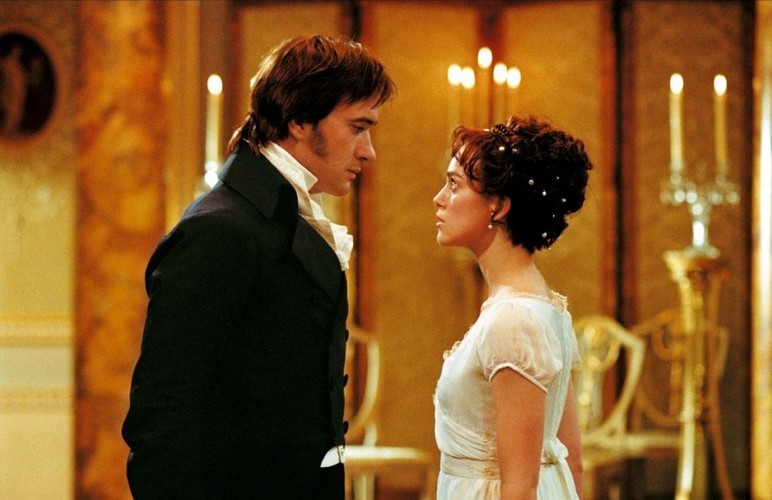


Recent Comments