by Naomi L. | October 6, 2014 | Blog, Word of the Week |
Word: serendipity
Pronunciation: se-rən-DI-pi-tee
Part of Speech: noun
Definition: the occurrence and development of events by chance in a happy or beneficial way
Source: Oxford Dictionaries
“Serendipity” is an intriguing word, isn’t it? Whenever I hear it, I think it could be the name of a celebrity or a word used to describe a situation of peace and calm. Interestingly enough, though, “serendipity” isn’t related to the word “serenity” yet does have a similar definition, as both words mean something positive.
“Serendipity” refers to the development of fortunate events that happen by chance. The word was coined in 1754 by Horace Walpole, 4th Earl of Orford, who drew it from an English translation of the Persian fairy tale The Three Princes of Serendip. Walpole evidently created the word to define the fortune of the story’s heroes, who, in his words, were “always making discoveries, by accidents and sagacity, of things which they were not in quest of”.
Life has a way of surprising us with a lucky streak at least once in a while. Hence, fictional characters are bound to have the occasional run of good fortune too. If you enjoy writing about lucky characters and favorable twists of fate, you can probably make plenty of references to “serendipity” in your stories! Good luck (pun totally intended)!
What are your thoughts on this word? Any suggestions for future “Word of the Week” featured words?
by Naomi L. | October 1, 2014 | Blog, Creative Writing, What If? Writing Prompts |
Here are some more “What If?” Writing Prompts for you. Similar to the set of romance prompts I shared a while back, today’s prompts focus on the general theme of love and peace. See what you can do with these and other like ideas. Even if you can only bring them to life in stories, it’s always worth a try to imagine what the world would be like if such ideas could become reality! Enjoy!
 What if… our religion was each other?
If our practice was our life?
If prayer was our words?
What if the Temple was the Earth?
If forests were our church?
If holy water—the rivers, lakes and oceans?
What if meditation was our relationships?
If the Teacher was life?
If wisdom was self-knowledge?
If love was the center of our being?
(Source: “What If?“, a poem by Ganga White; submitted by Rebecca Braun)
What if… Romeo and Juliet had lived, and the feud between the Montagues and the Capulets could have been resolved without the need for death?
(Source: continuation of my train of thought on alternative Romeo & Juliet endings)
What if… wars could be resolved without the need for physical combat?
What if… less people judged each other based on race/gender/orientation/etc. and more people made an effort to accept others for who they are?
What if… there were no such thing as “forbidden love”?
Good luck creating your own stories about the triumphs of love and peace!
If you have any “What If?” writing prompt suggestions (for any theme), please feel free to share them in the comments below. Ideas I like may be featured in future “What If?” posts, with full credit and a link to your blog (if you have one)! Also, if you’ve written a piece based on an idea you’ve found here, be sure to link back to the respective “What If?” post. I would love to see what you’ve done with the prompt! Thank you!
by Naomi L. | September 29, 2014 | Blog, Word of the Week |
Word: vernacular
Pronunciation: vər-NA-kyə-lər
Part of Speech: noun
Definition: the language or dialect spoken by the ordinary people of a country or region
Source: Oxford Dictionaries
Richard: You guys see me as a dad?
Joey: Oh yeah!
Chandler: No!
Joey: (seeing the look on Chandler’s face) Nooooo.
Chandler: You’re just clearly not familiar with our young person’s vernacular. See, when we say “dad”, we mean “buddy”. We mean “pal”. […] No no, seriously! Joey’s my dad. Monica’s my dad. I’ve even got some dads down at work.
– Friends (Season 2, Episode 20 – The One Where Old Yeller Dies)
The first (if not the only) instance in which I can remember hearing the word “vernacular” was in an old episode of Friends. After Joey lets slip that Monica’s boyfriend Richard is like a father to him and Chandler, the latter tries to cover up the mistake by insisting it’s a slang word for “friend”. Naturally Richard doesn’t buy this lie, but that doesn’t make him telling the guys he’s leaving to have a romantic evening with their other “dad” any less funny.
The “vernacular” of a particular region is the dialect normally spoken by its people. With a modifier, “vernacular” refers to the terminology used by a specific group of people or those who engage in a particular activity. The word comes from the Latin adjective vernaculus, meaning “domestic” or “native”. This adjective has historical roots in the noun verna, which means “house slave”.
Interestingly, the word “vernacular” isn’t exclusive to language; it can also refer to architecture that is “concerned with domestic and functional rather than monumental building”. Note that in both these contexts, the word can function as either a noun or an adjective. An example of the latter would be “vernacular literature”, in which case the word means “spoken or written using one’s mother tongue”. Whether you choose to use it formally (as in the above definitions) or informally (as in the dialogue example), this can be a great word to include in your stories. At the very least, your readers may find it easiest to relate to your writing through your “vernacular”!
What are your thoughts on this word? Any suggestions for future “Word of the Week” featured words?
by Naomi L. | September 24, 2014 | Blog, Creative Writing, What If? Writing Prompts |
Time for another set of “What If?” Writing Prompts. The theme of this week’s batch is mystery and suspense. I don’t have nearly enough experience writing in these genres, so I could definitely have some fun trying out these prompts! I hope you can too! Enjoy!
What if… you found a wedding ring under your bed… that wasn’t yours?
(Submitted by: Doug Langille)
What if… you thought that strange noise in the house was your cat… only to discover your cat was in the room with you the whole time?
What if… you found an old letter hidden in a library book?
What if… that kind elderly neighbor of yours were keeping a dark secret?
What if… you woke up one day to find that nobody could see or hear you?
Good luck spinning twisted tales full of mystery and suspense!
If you have any “What If?” writing prompt suggestions (for any theme), please feel free to share them in the comments below. Ideas I like may be featured in future “What If?” posts, with full credit and a link to your blog (if you have one)! Also, if you’ve written a piece based on an idea you’ve found here, be sure to link back to the respective “What If?” post. I would love to see what you’ve done with the prompt! Thank you!
by Naomi L. | September 22, 2014 | Blog, Word of the Week |
Word: lethargic
Pronunciation: lə-THAHR-jik
Part of Speech: adjective
Definition: sluggish and apathetic
Source: Oxford Dictionaries
I can’t pinpoint an exact moment when I may have heard the word “lethargic” for the first time. It’s one of those words that I happen to come across from time to time, as much in test prep lists as in literature. After recently stumbling upon it yet again, I actually wondered how I had neglected to add it to my vocabulary segment sooner. It is, after all, a word that I could so often use to describe myself…
To feel “lethargic” is to lack energy and enthusiasm. The word can be traced back to the Greek adjective lēthargos, meaning “forgetful”. This adjective is comprised of two roots: the noun lḗthē “forgetfulness” and the adjective argós “not working”.
“Lethargic” is one of those words I would keep on a reference list for describing human nature. Everyone has those days when they feel slow and uninterested in anything, so it stands to reason that fictional characters would have those days too. If you choose to write characters who fit this type, you’re bound to draw readers who can relate. Just try to avoid feeling too “lethargic” yourself to write the stories! Good luck!
What are your thoughts on this word? Any suggestions for future “Word of the Week” featured words?
by Naomi L. | September 17, 2014 | Blog, Creative Writing |
Welcome to the September round of Writers Reveal! This month’s topic was sent to us by Becky Fyfe of Imagine! Create! Write! Her prompt for us is “dreams”, so I decided to take advantage of the idea to write about a topic I’ve been meaning to share for a while: dreams as a source of creative inspiration. Thanks for the prompt, Becky!
The Stories Hidden in the Subconscious
We’re all well familiar with dreams, those little “films” that play out in our heads while we’re asleep. Some people easily remember their dreams after waking up, while others recall them only once in a while. There are nights when we seem to have several and nights when we barely seem to have one. Dreams have been associated with prophecies, divine messages, our deepest desires and a strange combination of the things that happened to us the day before. But one thing they apparently have in common is that they’re a way for the subconscious to tell stories.
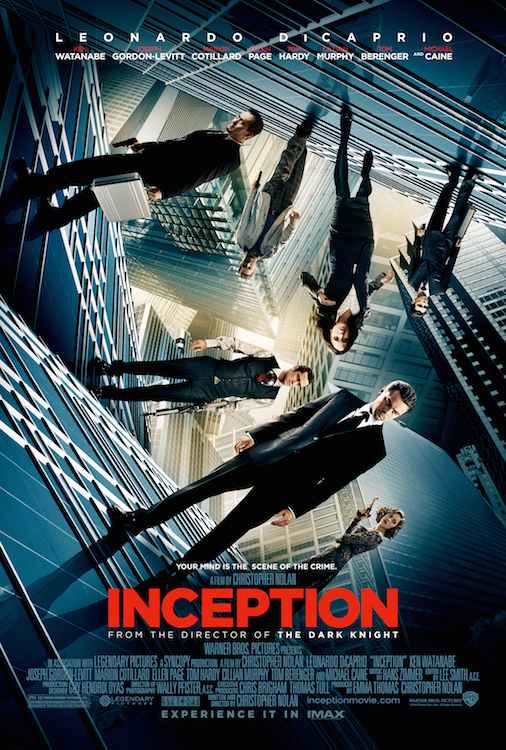
Dreams are a subject that I’ve always found intriguing. It’s one of the reasons Inception is on my list of favorite science fiction movies. I almost always remember my dreams when I wake up, and because of that, I’ve found plenty of inspiration for stories hidden in them. More than once, I’ve written a story based on an idea taken directly from a dream. Many of my dreams tell romantic stories, while others are full of action and adventure. I’ve had nightmares that inspired horror stories and euphoric dreams from which I was sad to wake up. My favorites even include some element of fantasy such as flying or breathing underwater. Yes, my dreams can get pretty bizarre, but I like to think they’re a reflection of my active writer’s imagination!
Harvesting Ideas from Dreams
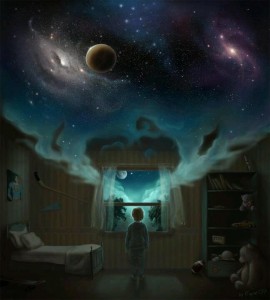 So how can you get the most use out of your dreams? It’s simple. If you’re lucky enough to remember your dreams after you wake up, I highly recommend writing them down. Dreams can be invaluable sources of story ideas, even if (and sometimes especially if) they’re confusing and surreal. If you tend to remember your dreams from almost every night, it may be good practice to keep a dream diary. Much like a regular journal, it can help you hold on to inspiration and can serve as a reference for ideas you didn’t even know you had!
So writers, don’t take your dreams for granted. Embrace them, write them down, try to understand them (however incomprehensible they may be) and extract as many ideas from them as you can. There may just be a goldmine of creative inspiration in your own subconscious!
Do your dreams inspire you? What stories have you written based on an idea that came from a dream?
This has been a special topic post for Writers Reveal, a monthly blog swap among several talented writers. Be sure to check out the other blogs participating in the event. Thanks for reading!
Other bloggers in Writers Reveal
Melissa Khalinsky: Melissa Writes
Becky Fyfe: Imagine! Create! Write!
Ashley Howland: Ghostnapped
Emily Hawker: You Learn Something New Every Day
Lee-Anne Walker: Is it just me?
We’re looking for more bloggers to join our circle! If you’re interested in participating in this monthly roundup, be sure to contact Emily Hawker so she can include you in our email list. Thank you!



Recent Comments