by Naomi L. | June 15, 2015 | Blog, Word of the Week |
Word: poetaster
Pronunciation: POH-ət-as-tər
Part of Speech: noun
Definition: a person who writes inferior poetry
Source: Oxford Dictionaries
Bet you can’t guess where I learned this week’s vocabulary word. To save you the trouble, I’ll tell you that I came across it while looking up VOCALOID music on YouTube, when I found a metal song titled “Poetaster and Singing Dolls“. Despite being terribly distracted by the artwork featuring Gakupo and Kaito in gothic attire (permission to fangirl, please?), I still managed to pay enough attention to the title to wonder what the word “poetaster” meant. I was intrigued from the moment I first read it, and after I looked it up, I quickly fell in love with it. Not that I wanted to be one myself, of course; after all, when it comes to my poetry, I always strive to write the best I possibly can.
A “poetaster” is an unskilled poet, that is, someone who writes poetry of inferior quality. The word was coined in the late 16th century by the Dutch Renaissance humanist Erasmus as a derogatory term for individuals who are implied to be pretentious about artistic value. This word is originally Latin and is comprised of the noun poeta “poet” and the suffix -aster, which is used to express incomplete resemblance to something in a negative way.
Though I loved the word “poetaster” as soon as I learned its definition, I confess it’s something that I’ve sometimes feared I might be. Every writer doubts the quality of their work from time to time, and though I prefer writing short stories and flash fiction, I don’t take any less care when writing poetry. In all fairness, the term “poetaster” seems to apply to unskilled poets who think they’re tremendously talented, so I suppose any writer is safe from this insult as long as they remain humble about their work. A couple of synonyms for “poetaster” are “rhymester” and “versifier”, though these tend to be ambiguous while the former is always negative. If you’ve written a character who’s pretentious about poetry, you may have a “poetaster” lurking in your stories. Just take care not to be one yourself!
What are your thoughts on this word? Any suggestions for future “Word of the Week” featured words?
by Naomi L. | June 10, 2015 | Blog, Creative Writing |
Yes, I know it’s been a while since I’ve posted one of these, but I haven’t forgotten about this series! On the topic of art and science, so far I’ve discussed their similarities and differences in reading, writing, and research. Now it’s time to discuss another important part of any type of writing: editing. How do art and science compare when it comes to proofreading your work?
How the Art is like the Science
Editing is an essential part of writing, no less important than the creative part. It’s a practice that every writer must undertake at least at the most basic level. Even if you hand your work off to someone else for proofreading, you still need to be confident in the quality of whatever you’re passing on, and the only one who can make that call is you. Whether you write artistically or scientifically, rewriting is writing, and you can’t expect that writing to go very far unless you give it the care and attention it deserves.
Artists and scientists alike are expected to master the technique of editing. We have to know how to take a step back and review everything we’ve written with a fresh perspective. We must be able to channel our inner writer and our inner critic and learn when to listen to which voice. We have to be able to catch mistakes in a second, third, fourth reading. We need to be able to identify weak points and figure out how to connect all our ideas into one coherent picture. Regardless of our form, style, or content, the ability to edit our own work is indispensable if we wish to be taken seriously in this ever-expanding world of the written word.
At its core, editing is crucial to all forms of writing. The process of editing, however, differs between artistic and scientific writing.
How the Art is unlike the Science
Editing artistic writing is something of a linear process. First, it’s up to the writer to look over their work and make as many changes as they deem appropriate. As the best of us know, this part alone can take weeks, if not months or even years. Once the author is satisfied with their draft, the baton is often passed to an editor, ideally a professional, who provides fresh opinions on how to improve the piece. A back-and-forth between the writer and the editor is encouraged at this stage for the benefit of the work being revised, and some writers choose to include a beta reader or two for additional insight. Novelists who opt for the traditional route also need to wait for their manuscript to be approved by a publishing house, yet another stop on the road to publication. Only when a written work has passed all the checkpoints can it finally reach the public, and while there may be some overlapping along the way, the process as a whole is basically one continuous track.
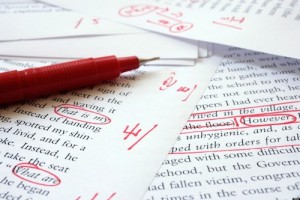 Scientific writing, on the other hand, is revised through a sort of “simultaneous editing”. For example, my first experience writing a research paper involved a collaborative effort among me, my professor, and two other authors. One researcher was responsible for most of the writing, then we each had to review the first draft on our own time and send each other our notes so the lead author could incorporate them all into one updated draft for a second round of reviews. This process was repeated several times until we were all satisfied enough with the final draft to submit it for peer review, at which point it was up to another group of researchers to simultaneously read it over and contribute their opinions. Since an academic paper usually takes more than one writer to put together, it’s much more time efficient to have multiple editors review it at the same time throughout the stages from writing to publication, especially in an age when information is emerging faster than we can keep up with it. In short, multiple reviewers plus simultaneous editing equals faster science.
The art of editing is learning how to balance the inner writer and the inner critic, while the science of editing is refining your work into a piece worthy of public attention. How to go about it may depend on what exactly you write, but if you can master the technique, you can be sure it’ll bring you one step closer to being on the outside what you already are at heart: a full-fledged writer.
by Naomi L. | June 8, 2015 | Blog, Word of the Week |
Word: debauchery
Pronunciation: di-BAH-chə-ree
Part of Speech: noun
Definition: excessive indulgence in sensual pleasures
Source: Oxford Dictionaries
Last week, I talked about a word for someone who lives by the philosophy of enjoying the fine things in life while still maintaining a modest lifestyle. But what if you wanted to refer to an overindulgence in such pleasures? That’s when you’d step out of the realm of Epicureanism and into the territory of “debauchery”.
“Debauchery” is the act of excessively indulging in sensual pleasures. The word is derived from the verb “debauch”, which means “to morally corrupt”. This verb can be traced back through the Middle French verb desbaucher “to entice from one’s duty” to the Old French verb desbauchier “to lead astray”, which in turn likely comes from the Proto-Germanic noun balkô “balk”.
While “debauchery” can refer to any sort of overindulgence in sensual enjoyment, the word is most commonly associated with scandals involving physical gratification and substance abuse. A somewhat dated sub-definition of the verb “debauch” is “to seduce”, and it can also function as a noun to denote “an individual act of debauchery”. Writers, take note: if your characters seek enjoyment in moderation, you may be writing “epicureans”, but if they go over the top with these pleasures, then “debauchery” may be afoot in your stories! Choose your nouns wisely!
What are your thoughts on this word? Any suggestions for future “Word of the Week” featured words?
by Naomi L. | June 3, 2015 | Blog, Creative Writing, What If? Writing Prompts |
Time for another set of “What If?” Writing Prompts. Speaking of time, this week’s batch is centered around a fascinating theme yet to be featured in this segment: history! How might true stories have played out differently if certain historical details were changed? Have fun exploring the possibilities!
 What if… most of the greatest leaders in history had been women?
What if… the Roman Empire had never fallen?
What if… the Church had not been the most powerful entity in the Middle Ages?
What if… the slave trade had never made it to the United States?
What if… the Axis powers had won World War II?
Good luck writing your own twists on history!
If you have any “What If?” writing prompt suggestions (for any theme), please feel free to share them in the comments below. Ideas I like may be featured in future “What If?” posts, with full credit and a link to your blog (if you have one)! Also, if you’ve written a piece based on an idea you’ve found here, be sure to link back to the respective “What If?” post. I would love to see what you’ve done with the prompt! Thank you!
by Naomi L. | June 1, 2015 | Blog, Word of the Week |
Word: epicurean
Pronunciation: e-pi-kyə-REE-ən / e-pi-KYƏ-ree-ən
Part of Speech: noun
Definition: a person devoted to sensual enjoyment, especially that derived from fine food and drink
Source: Oxford Dictionaries
I recently learned today’s Word of the Week from playing a mobile game. The theme? Cooking! Yes, this week’s vocabulary word is related to food, and of high quality at that. It’s only natural to want to enjoy the finer things in life, so if such a dream is beyond reach in reality, why not live vicariously through a fictional “epicurean” instead?
An “epicurean” is someone who is dedicated to pleasure on a sensual level, usually pertaining to gourmet food and luxury. The original word is capitalized and refers to “a follower of Epicureanism“, a philosophy founded on the teachings of the Ancient Greek philosopher Epicurus. This noun traces back through the Old French noun Epicurien and the Latin noun Epicureus to the Ancient Greek noun Epikoúreios.
Epicurus was a materialist who believed pleasure is the greatest good and that happiness should be achieved by living a self-sufficient life free of fear and pain. Though primarily a noun, “epicurean” can also be used as an adjective to describe people who live by this philosophy of sensual enjoyment, particularly of good food and drink. Note, however, that Epicureanism does not condone the overindulgence of fleeting pleasures, but rather advocates the prudence of knowing the limits of one’s own desires. If you write characters with refined tastes and modest lifestyles, “epicurean” is the perfect word to define them! Good luck!
What are your thoughts on this word? Any suggestions for future “Word of the Week” featured words?
by Naomi L. | May 27, 2015 | Blog, Creative Writing, What If? Writing Prompts |
So it seems my ultra busy grad school schedule is catching up with me yet again, so for now, I’m afraid I’ll have to pad over my creative writing topics with some “What If?” Writing Prompts at least every other week. My apologies for not being able to bring you more fulfilling content for a while, but I hope you’ll find these posts entertaining nonetheless.
Since I enjoyed writing for the Earth Day post so much, I figured I’d try my hand at coming up with another batch of nature-themed prompts. See what sorts of environmental stories you can create based on these ideas! Enjoy!
What if… the world ran entirely on renewable energy sources?
What if… a massive space object were to black out the sun?
What if… there were ecosystems completely uninfluenced by human actions?
What if… species could evolve fast enough to keep up with the accelerated environmental changes caused by people?
What if… humans were an endangered species?
Have fun spinning your own environmental tales!
If you have any “What If?” writing prompt suggestions (for any theme), please feel free to share them in the comments below. Ideas I like may be featured in future “What If?” posts, with full credit and a link to your blog (if you have one)! Also, if you’ve written a piece based on an idea you’ve found here, be sure to link back to the respective “What If?” post. I would love to see what you’ve done with the prompt! Thank you!



Recent Comments