by Naomi L. | July 6, 2015 | Blog, Word of the Week |
Word: commandeer
Pronunciation: kah-mən-DEER
Part of Speech: verb
Definition:
- officially take possession or control of something, especially for military purposes
- take possession of something without authority
Source: Oxford Dictionaries
Will Turner: We’re going to steal a ship? That ship?
Jack Sparrow: Commandeer. We’re going to commandeer that ship. Nautical term.
– Pirates of the Caribbean: The Curse of the Black Pearl (2003)
Let’s have some fun with another word I picked up from Pirates of the Caribbean. The word “commandeer” comes up quite a few times in the first film of Disney’s popular Pirates series, where it’s (logically) always used by Captain Jack Sparrow. A notable example is when he and Will are planning to take one of the military’s prized ships on their mission to rescue the kidnapped Elizabeth, in which case Jack replaces Will’s blunt choice of words with a “nautical term” that frankly makes little difference except for being easier on the ears (and the conscience).
To “commandeer” something is to take control of it by force, either officially for military purposes or without authority. The word has an interesting history to it, tracing back from the early 19th century through the Afrikaans verb kommandeer and the Dutch verb commanderen to the French verb commander, meaning “to command”. This verb is derived from the Latin verb commendare, which is comprised of two roots: the preposition com (denoting intensive force) and the verb mandare (“to commit” or “to command”).
I suppose the word “commandeer” is similar to the word “usurp“, at least in its second sense. Interestingly, the word can also apply to people, as a sub-definition of it is “enlist someone to help in a task, typically against the person’s will”. So take note: if your characters make a habit of engaging in official or unauthorized business, they may find the need to “commandeer” something (or someone) once in a while! Good luck!
What are your thoughts on this word? Any suggestions for future “Word of the Week” featured words?
by Naomi L. | July 1, 2015 | Blog, Creative Writing |
Grammar is a beautiful thing, isn’t it? If you agree, then you too may be a grammar nerd! We grammar enthusiasts come in all shapes and sizes, and there are millions of us scattered all over the world. But have you ever wondered what sort of people make up most of the grammar nerd population?
If you have, then you’re in luck! To celebrate a milestone of 5 million Facebook fans, Grammarly has released an infographic breaking down the major percentages of their grammar-loving audience. See where you fit in the wide world of grammar nerds! Enjoy!

My Grammar Nerd Anatomy
- Woman
- College-educated
- 25 years old (so close!)
- In a relationship
- Scientist (but I conduct my research at a university, so I guess that counts as Education)
- Living in South America, though I was raised in the United States
- “Irregardless” is not a word! Let’s get it right, people.
- I love books, I love words, and the Oxford comma has really been growing on me lately.
- Semi-colons are awesome; that’s just a fact.
Feel free to share your profile in the comments! Have fun!
Today’s creative writing post is brought to you by Grammarly, the World’s Best Grammar Checker. For more information on Grammarly, visit http://www.grammarly.com/grammar-check. Thanks for reading! Happy writing!
by Naomi L. | June 29, 2015 | Blog, Word of the Week |
Word: soporific
Pronunciation: sah-pə-RI-fik
Part of Speech: adjective
Definition: tending to induce drowsiness or sleep
Source: Oxford Dictionaries
Have you ever been doing or experiencing something and suddenly started to feel drowsy because of it? Well, that activity had a “soporific” effect on you. We’ve all encountered something at one time or another that made us sleepy: medicine, a long plane ride, a boring movie. And if we’re going to subject our characters to the same kind of experiences, why not have an uncommon word handy to define whatever is putting them to sleep?
Something that’s “soporific” has a tendency to include sleepiness or drowsiness in people. The word arose in the mid 17th century and can be traced back to the French adjective soporifique. This adjective in turn is derived from the Latin noun sopor, meaning “deep sleep”.
Aside from its primary definition, “soporific” can also be used to describe a person who is feeling sleepy or drowsy. Another sub-definition of the word is “tediously boring or monotonous”, and in some cases it functions as a noun to refer to “a drug or other agent that induces sleep”. Whatever the context, “soporific” is a good word to keep in mind for anything in your stories that puts your characters to sleep. Just try to make sure your writing isn’t “soporific” to your readers! Good luck!
What are your thoughts on this word? Any suggestions for future “Word of the Week” featured words?
by Naomi L. | June 24, 2015 | Blog, Creative Writing |
When it comes to creative writing, there are plenty of sources of inspiration out there. Several of them have been featured here on my blog, from books to music to video games. But one particularly beautiful source of inspiration that I have yet to discuss is visual art.
So today, I’d like to explore the inspiration that visual works of art can provide for creative writing. How can art composed of images become fruit for art composed of words? Enjoy!
Worth a Thousand Ideas
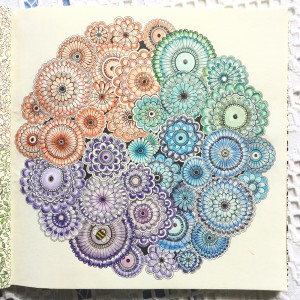 Visual art is arguably the “most universal” art medium. It comes in many forms: drawings, paintings, photography, sculptures, etc. They can come in a vast array of colors or a monochromatic spectrum from black to white. They can be amateur pieces created for fun or professional-quality works on display in the finest galleries in the world. But one thing they all have in common is that they were each born from an idea. If you think about it, doesn’t that make them a sort of “writing with images”?
Similar to creative writing, a work of visual art can start as one idea that grows into a whole network of connected thoughts, stories, possibilities, all waiting to be discovered by the artist’s audience. These can prove especially inspirational to writers, as the quality of our work relies on our ability to create images in our readers’ minds the same way that visual artists create images for their viewers’ eyes. So the next time you feel stuck in your writing, why not try to draw ideas from the beauty within a visual piece?
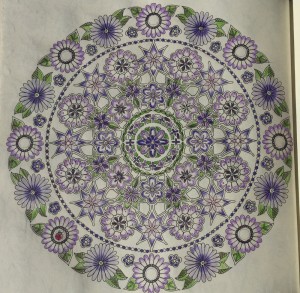 Gaze into the Mona Lisa‘s eyes and try to imagine what she’s thinking. Mentally reassemble the shapes of an abstract work into something concrete. Improvise a scene based on your favorite photograph. Write a poem based on the emotions evoked by the colors in a classic painting. If a picture is worth a thousand words, then challenge yourself to see how many of them you can fit into a story. You never know what ideas may be hidden in a visual work until you look for them!
Visual art is a beautiful means of expression that can spark all sorts of other wonderful forms of art. Just a brief look is often enough to get our creativity flowing. But what happens when you create visual art yourself?
From Drawings to Words
When I was in high school, I would sometimes find my mind wandering in the middle of class. To pass the time, I would draw the occasional doodle in my textbook. Most of these drawings consisted of wings, dolphins, and horses, with a wolf and a tiger thrown into the mix for good measure. I’ll be the first to admit that they weren’t very good, but those drawings, however distracting they were from schoolwork, actually taught me a few interesting things about myself: I love animals, I love movement, and I wish I could fly. And from then on, I applied all those facts to my writing.
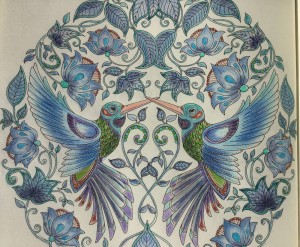 If you were to look back through all the Friday posts on my blog, you’d probably notice that most of my stories feature animals and other non-human characters. I’ve written a poem about what I would do if I had wings, and one of my most popular creative writing posts is about how to write for animal characters. Even a look through my novel ideas would reveal a pattern of bird motifs. Though drawing was never my strong suit, it did give me plenty of ideas for my creative writing, and for that I’ll always appreciate it as one of the many invaluable sources of inspiration for my true artistic passion.
So even if it’s not your forte, I strongly recommend giving visual art a chance. Draw, paint, take photos, anything that can jumpstart the creative part of your mind. The ideas you find in your art may become the inspiration for your next big written work. And if you’re lucky, you may discover something beautiful about yourself along the way. Good luck, and thanks for reading!
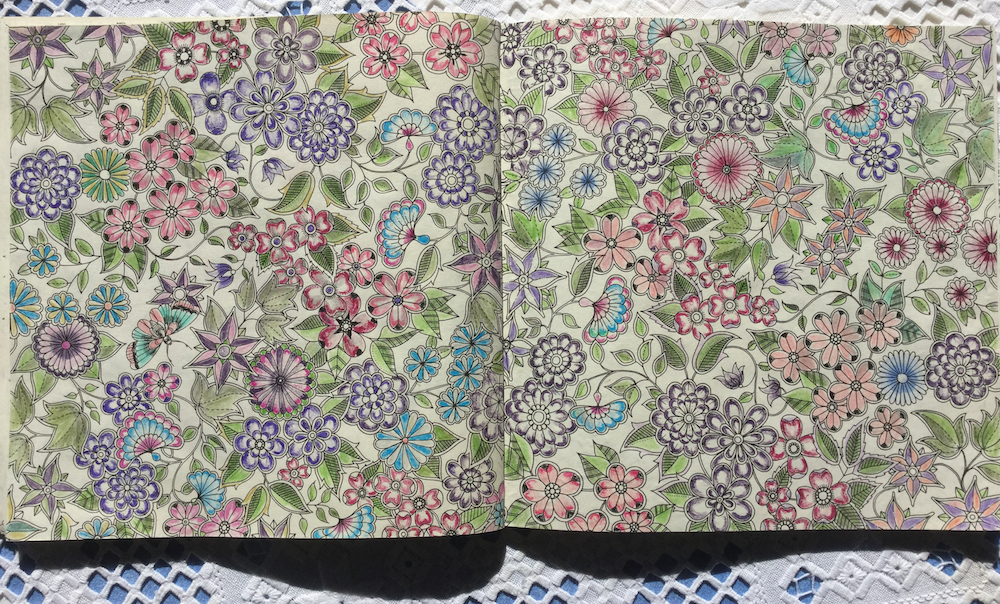
Today’s post is dedicated to my grandmother, whose lovely work in Johanna Basford’s Secret Garden coloring book served as the illustrations for this article. Happy Birthday, Grandma! I love you!
by Naomi L. | June 22, 2015 | Blog, Word of the Week |
Word: usurp
Pronunciation: yoo-SƏRP
Part of Speech: verb
Definition: take a position of power or importance illegally or by force
Source: Oxford Dictionaries
Virtually every fan of medieval stories should be familiar with this week’s vocabulary word. It’s not uncommon to see characters of fantasy and history alike “usurp” a throne or high rank from an unpopular ruler. Being fascinated with the Middle Ages myself, I’ve read my fair share of tales about monarchs and tyrants being overthrown from power, and though the specific word for it isn’t always used, the action does always make for an exciting story!
To “usurp” a high position of power is to take it by force or otherwise illegal means. The word arose in Middle English and was used in the sense “to wrongfully appropriate a right”. This verb can be traced back through the Old French verb usurper to the Latin verb usurpare, meaning “to seize for use”.
Though I was already well familiar with the word “usurp”, I admit I began showing a greater interest in it when I started reading A Game of Thrones (still on the first book and haven’t watched the series yet, so no spoilers, please!), as it seems to be the driving goal of at least every other character in the story. I’ve read this word most often in medieval fiction, but it works well in any scenario of power shifting by force. A sub-definition of “usurp” is “to take the place of someone in a position of power illegally”, and writers of historical fiction may find use in the archaic meaning “to encroach or infringe upon someone’s rights”. If you write characters who seek to steal power from others, “usurp” is definitely the word to define their objectives! Good luck!
What are your thoughts on this word? Any suggestions for future “Word of the Week” featured words?
by Naomi L. | June 17, 2015 | Blog, Creative Writing, What If? Writing Prompts |
Once again, here’s a fresh round of “What If?” Writing Prompts for you. I realize I haven’t shared any particularly scary prompts since Halloween, so this week’s post features the second set in this segment themed to the horror genre, featuring prompts suggested by members of Writer’s Carnival! What sorts of creepy tales can you spin around these ideas? Enjoy!
 What if… Hannibal Lecter were your neighbor?
(Submitted by: Christina, Writer’s Carnival member)
What if… humanity had to adapt to life underground… and drastically changed after thousands of years in the dark?
(Submitted by: Anisa A. Claire, co-founder of Writer’s Carnival)
What if… your cat became smarter and started trying to kill you?
(Submitted by: Tim Hillebrant, Writer’s Carnival staff member)
What if… the second you stepped out of bed, a hand reached out from under it and grabbed your ankle?
What if… you received a package in the mail containing a human head?
Have fun writing your own tales of horror!
If you have any “What If?” writing prompt suggestions (for any theme), please feel free to share them in the comments below. Ideas I like may be featured in future “What If?” posts, with full credit and a link to your blog (if you have one)! Also, if you’ve written a piece based on an idea you’ve found here, be sure to link back to the respective “What If?” post. I would love to see what you’ve done with the prompt! Thank you!



Recent Comments