by Naomi L. | September 9, 2013 | Blog, Word of the Week |
Word: loquacious
Pronunciation: loh-KWAY-shəs
Part of Speech: adjective
Definition: talkative
Source: Oxford Dictionaries
Tulio: Any last words?
Miguel: I will cut you to ribbons!
Tulio: Fool! Such mediocrity! Let your sword do the talking!
Miguel: I will, it will be loquacious to a fault!
– The Road to El Dorado (2000)
Anyone who ever enjoyed animated films as much as my sisters and I did (and still do, at least in my case) probably remembers a rather entertaining Dreamworks film from 2000 titled The Road to El Dorado, which tells the story of two con artists from 16th-century Spain and the adventure that leads them to El Dorado, the lost city of gold, in the New World. Aside from countless laughs shared with my sisters and about half a dozen Elton John songs that I couldn’t get out of my head, this movie also brings back the memory of the first time I heard the word “loquacious” used in a sentence. Of course, it would still be a few years before I understood what Miguel was saying while pretending to duel with Tulio, for it wasn’t until I looked up the meaning of this word that I recognized his comment for the comically poetic retort it was intended to be.
Put simply, a “loquacious” person is someone who is naturally talkative. The word stems from the Latin adjective loquax, which basically means “talkative”. This word, in turn, has roots in the Latin verb loqui, meaning “to talk” or “to speak”. “Loquacious” is also believed to have originated in the mid 17th-century, which, when you think about it, makes its use in the setting of The Road to El Dorado an anachronism. But who really cares about such details when it comes to a children’s movie, right?
It should be noted that while “loquacious” is another word for “talkative”, the two adjectives aren’t exactly synonyms. A “talkative” person is usually ready and willing to engage in conversation, while a “loquacious” person is often considered excessively chatty, possibly to the point of being annoying. Therefore, one could read Miguel’s comment about his “talkative sword” as a little redundant, though I don’t believe it takes away from the hilarity of the show he and Tulio put on as a cover to escape from the authorities!
Tulio: Ladies and gentlemen, we’ve decided it’s a draw!
Miguel: Thank you all for coming! You’ve been great, see you soon!
Tulio: Adios!
What are your thoughts on this word? Any suggestions for future “Word of the Week” featured words?
by Naomi L. | September 2, 2013 | Blog, Word of the Week |
Word: prosaic
Pronunciation: proh-ZAY-ik
Part of Speech: adjective
Definition:
- having the style or diction of prose; lacking poetic beauty
- commonplace; unromantic
Source: Oxford Dictionaries
Joe Fox: So what’s his handle?
[…]
Kathleen Kelly: All right, NY152.
Joe: N-Y-one-five-two. One hundred and fifty-two. He’s a hundred and fifty-two years old. He’s had one hundred and fifty-two moles removed, so now he’s got one hundred fifty-two pock marks on his… (laughing) on his face… […] A hundred and fifty-two stitches from his nose job. The number of his souvenir shot glasses that he’s collected in his travels.
Kathleen: No! The number… The numb- His address? No! No, he would never do anything that prosaic.
– You’ve Got Mail (1998)
I always remember this excerpt from the movie You’ve Got Mail as the first instance in which I ever heard the word “prosaic”. While executing his plan to win over his love interest before revealing himself as her secret online friend, Joe Fox casually strikes up a conversation with Kathleen Kelly about the mystery person with whom she’s become infatuated. The two of them have fun trying to decipher the meaning of his screen name and come up with some colorful explanations for the number 152 – such as how many people think he looks like Clark Gable (or a Clark Bar) – so that by the time Kathleen stumbles upon the right answer, she merely dismisses it as an idea too straightforward for the poetic gentleman she’s come to know through the Internet (unaware, of course, that he’s standing right next to her).
An idea regarded as “prosaic” is considered simple and ordinary, sometimes in the sense of being boring. Writing or speech that’s “prosaic” is straightforward in style, thus lacking in poetic charm. The word can be traced back through Latin, from the adjective prosaicus (“in prose”) to the adjective prosa (“straightforward style”). “Prosaic” was also used in the late 16th century as a noun referring to a writer of prose, and its current definitions date back to the 18th century.
I find the word “prosaic” interesting for its contrast with the word “poetic”. Because these adjectives seem to be mutually exclusive, writing and speech can usually be considered either one or the other. That isn’t to say they’re collectively exhaustive, of course; one could argue that “purple prose” is a form all of its own, incorporating elements of both while having neither the straightforwardness of prose nor the elegance of poetry. Despite its possible neutral connotations, I would likely use the word “prosaic” in a sense similar to “pedestrian“, that is, to indicate an idea that’s a little too plain for its given context. Whether you use it to refer to a simple form of composition or to a humdrum concept, “prosaic” is an interesting word to consider for your writing (even if you wouldn’t necessarily use it to describe your style).
What are your thoughts on this word? Any suggestions for future “Word of the Week” featured words?
by Naomi L. | August 26, 2013 | Blog, Word of the Week |
Word: altruism
Pronunciation: AL-troo-iz-əm
Part of Speech: noun
Definition: the belief in or practice of disinterested and selfless concern for the well-being of others
Source: Oxford Dictionaries
Remember that dialogue from The Big Bang Theory that I used to demonstrate last week’s vocabulary word? Well, it’s time to learn about the other word that was tripping Penny up.
“Altruism” refers to the theory or practice of putting the well-being of others before one’s own. In other words, “altruism” is the virtue of doing good deeds without expecting any benefits in return, as described in studies of various cultures and religions. The word can be traced back through different languages, from the French noun altruisme; to the Italian adjective altrui “other person”; to the Latin term alteri huic, meaning “to this other”.
In philosophy, “altruism” is the opposite of “egoism”, that is, the view that people’s actions are driven by self-interest. However, some disagree on whether these concepts are mutually exclusive, since doing good for others often comes with the side effect of personal gratification. Interestingly, the term “altruism” is also used in zoology to define the behavior of an animal that benefits others at its own expense (e.g. monkeys that sound alarm calls when predators are near, warning their troop of danger while simultaneously drawing attention to themselves).
Because of the weight it carries as a scientific and/or religious concept, the word seems to me like an even more virtuous form of “selflessness”. While a “selfless” person does good mostly for people closer to them, an “altruistic” person has a natural tendency to put the welfare of others in general before their own. That’s not to say these synonyms can’t be used interchangeably, of course; this is simply my own interpretation. In any case, “altruism” is usually a great character trait for a narrative’s hero, so it may be a good word to know for your writing, especially if you write adventure stories. A truly admirable protagonist is often a selfless one!
What are your thoughts on this word? Any suggestions for future “Word of the Week” featured words?
by Naomi L. | August 21, 2013 | Blog, Creative Writing, Featured, Tropes |
*click*
Have you ever read a story or watched a movie/play where you noticed a certain item being used as an important plot device in a major scene, only to realize that the object in question had already made an appearance in a previous scene as some seemingly insignificant prop in the background?
Well, what you witnessed was the figurative (or in some cases, literal) firing of a Chekhov’s Gun.
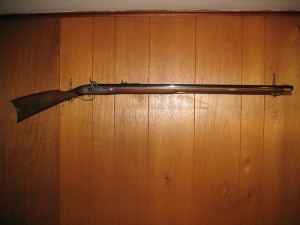
The Loaded Rifle on the Wall
The Chekhov’s Gun is a literary technique that places significance on a certain story element that was introduced earlier on as an unimportant detail. The trope is based on a dramatic principle conceived by Russian playwright Anton Chekhov (1860-1904), which states that every detail presented in a story must either be necessary to the plot in some way or removed from the narrative altogether.
If you say in the first chapter that there is a rifle hanging on the wall, in the second or third chapter it absolutely must go off. If it’s not going to be fired, it shouldn’t be hanging there.
– Anton Chekhov (S. Shchukin, Memoirs. 1911)
It’s important to note here that a Chekhov’s Gun is not necessarily an actual gun; the playwright’s example was merely used in reference to live theater, where a loaded gun on stage would pose an unnecessary safety hazard if it wasn’t going to be used as anything more than a background prop. Rather, the device is a metaphor for any element of a story that can become important later on. It doesn’t even have to be an object; it can just as easily be a character, a skill, a line of dialogue, etc. A full list of possibilities and variants can be found at the TV Tropes Chekhov’s Gun Depot.
Handling a Chekhov’s Gun in Your Writing
There are two main concepts connected with this trope:
- Conservation of Detail – Every detail presented in a story has an important reason for being there
- Foreshadowing – A detail given early on is an indication of a plot point that will happen later in the narrative
While a Chekhov’s Gun should really be used with the former concept in mind, it’s most commonly associated with the latter. Writers will often use this trope as a tool to indicate upcoming events in the story, usually in a subtle manner that goes virtually unnoticed the first time around and becomes clear after the revelation of the foreshadowed plot point.
So how should you use this technique in your own stories? To properly execute a Chekhov’s Gun, the element in question must have some level of presence established in its introduction, not necessarily so much that it gives away a potential plot twist, but enough that the audience will realize it was there all along by the time it becomes significant. This will keep your readers from assuming you pulled some random solution out of thin air to hastily tie the plot together at the end, and thus prevent you from evoking their disappointment.
Also, bear in mind that there is such a thing as too many Chekhov’s Guns in one story. While you shouldn’t feel limited to just one per narrative (and many writers aren’t, myself included), you should still take care not to go overboard with the trope. Of course, these limits may vary depending on the type of work in which it’s used; for example, fantasy sagas or mystery thrillers may depend heavily on these devices to help drive the plot (as seen in the Harry Potter series, which even has its own Chekhov’s Gun page on TV Tropes), whereas simpler action stories could work just fine with only a couple at most. So if you’re planning to write long narratives full of twists, you might be able to make good use of this technique throughout the entire story arc. It’s worth noting, though, that if the plot becomes convoluted enough, your readers might eventually start looking for significance in the tiniest details to try to find Chekhov’s Guns that you may or may not have placed in your story. But then again, maybe that’s exactly what you want.
The Chekhov’s Gun can be a useful device in fiction, provided it’s used correctly and in proper tone with the story. Whether you choose to use this technique for major plot points or just to add some interesting twists, be sure to always keep in mind the importance of only including details with a given purpose, and you’ll be able to build a narrative that highlights the plot and tells a story that can be freely complex on the surface while remaining simple and straightforward at its core. And that, in my opinion, is the best type of story a writer can create. Happy writing!
*BANG!*
by Naomi L. | August 19, 2013 | Blog, Word of the Week |
Word: assuage
Pronunciation: ə-SWAYJ
Part of Speech: verb
Definition:
- make (an unpleasant feeling) less intense
- satisfy (an appetite or desire)
Source: Oxford Dictionaries
Amy: Perhaps you could assuage your guilt through altruism. (pause as Penny looks confused) Which word’s tripping you up? Assuage or altruism?
Penny: Both.
Bernadette: You’ll feel better by doing something nice for someone.
Penny: I actually knew that.
Amy: I never doubted you.
– The Big Bang Theory, (Season 5, Episode 11- The Speckerman Recurrence)
The above dialogue was taken from an episode of The Big Bang Theory, when Penny realizes a certain truth about herself of which she wasn’t aware until her friends brought the subject to her attention: she was a bully in high school. In light of this revelation, Bernadette and Amy suggest she do charity work in order to ease the guilt she starts to feel over the suffering she caused her peers as a teenager, a fact she claims to have already known (though not quite in the same sophisticated manner as her biologist friends).
To “assuage” a bad feeling is to ease it, thus making it less unpleasant. When referring specifically to a wish or appetite, to “assuage” it means to satisfy it. The word can be traced back to the Old French verb assouagier (“appease, calm”), which is based on the Latin roots ad- “to” and suavis “pleasant, sweet”.
This verb is one of several synonyms for “alleviate”, though each seems to have its own specific uses. While “relieve” suggests reducing discomfort to a tolerable level and “allay” is often used to demonstrate a negative emotion (as in fear or suspicion) being put to rest, “assuage” implies an achievement of satisfaction on a greater or more permanent scale. Therefore, I would suggest using the word in reference to the relief of unpleasant feelings that are relatively more intense, such as the guilt that drove Penny to call an old bullying victim of hers and apologize to her for pranks mistakenly thought to have been all in good fun. Whether used to express alleviation of strong emotions or of simple desires, “assuage” is a good verb to consider when seeking the best word on the “relieve” spectrum for your writing. Use it well!
What are your thoughts on this word? Any suggestions for future “Word of the Week” featured words?
by Naomi L. | August 12, 2013 | Blog, Word of the Week |
Word: taciturn
Pronunciation: TA-si-tərn
Part of Speech: adjective
Definition: reserved or uncommunicative in speech; saying little
Source: Oxford Dictionaries
Mr. Darcy: Do you talk, as a rule, while dancing?
Elizabeth Bennet: No… No, I prefer to be unsociable and taciturn. Makes it all so much more enjoyable, don’t you think?
– Pride & Prejudice (2005)
My mother is a big fan of Pride & Prejudice, as much Jane Austen’s novel as the 2005 movie. To hear her tell it, it’s one of those films that she’ll watch over and over again whenever she sees it showing on TV, because every time she watches it, she takes away something new. And having watched it many times with her already, I have to say that I agree. However, it’s worth mentioning that while my mom is probably learning about the complexities of social protocol in early 19th-century England, I’m learning more about the differences in speech between the language of two centuries ago and that of today, including the differences in common vocabulary. “Taciturn” is one word that jumped out at me a few times while watching this movie, and though I didn’t think much of it at first, I realized after looking it up that it was more relevant to me and my life than I realized…
A “taciturn” person is one who is reserved in their speech, that is, someone who doesn’t talk much. It emerged in the late 18th century (close to the time period of Pride & Prejudice) from the Latin adjective taciturnus, meaning “silent” or “quiet”. This in turn came from tacitus, the past participle of the verb tacere (“be silent”) and the root of the adjective “tacit”, which means “understood or implied without being stated”.
So why do I consider the word “taciturn” relevant to me? Because it’s an adjective I could use to describe myself. Maybe not in every social situation (especially when I’m only in the presence of people close to me), but certainly in public. When it comes to the outside world, most of my communication is in the form of writing instead of speaking. Because of this, I would probably use the word “taciturn” to describe a character similar to me: withdrawn and mostly quiet, more of a listener than a talker. Much like the witty Elizabeth Bennet, who prefers to remain silent and observant during a dance, a person who comes off as “taciturn” on the surface could prove to be a wonderfully complex and engaging character in any story, particularly those as intricate as Jane Austen’s novels.
What are your thoughts on this word? Any suggestions for future “Word of the Week” featured words?



Recent Comments